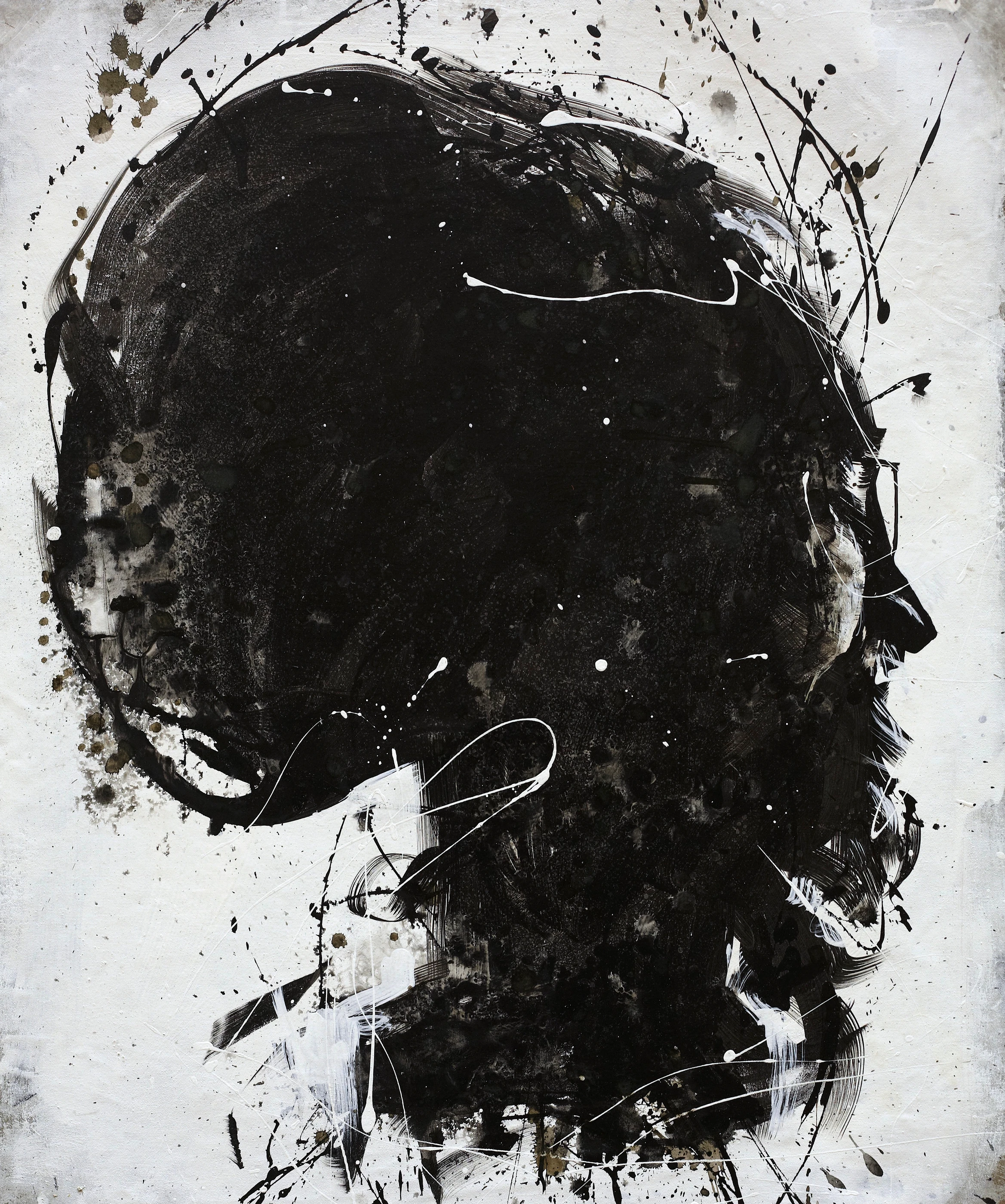
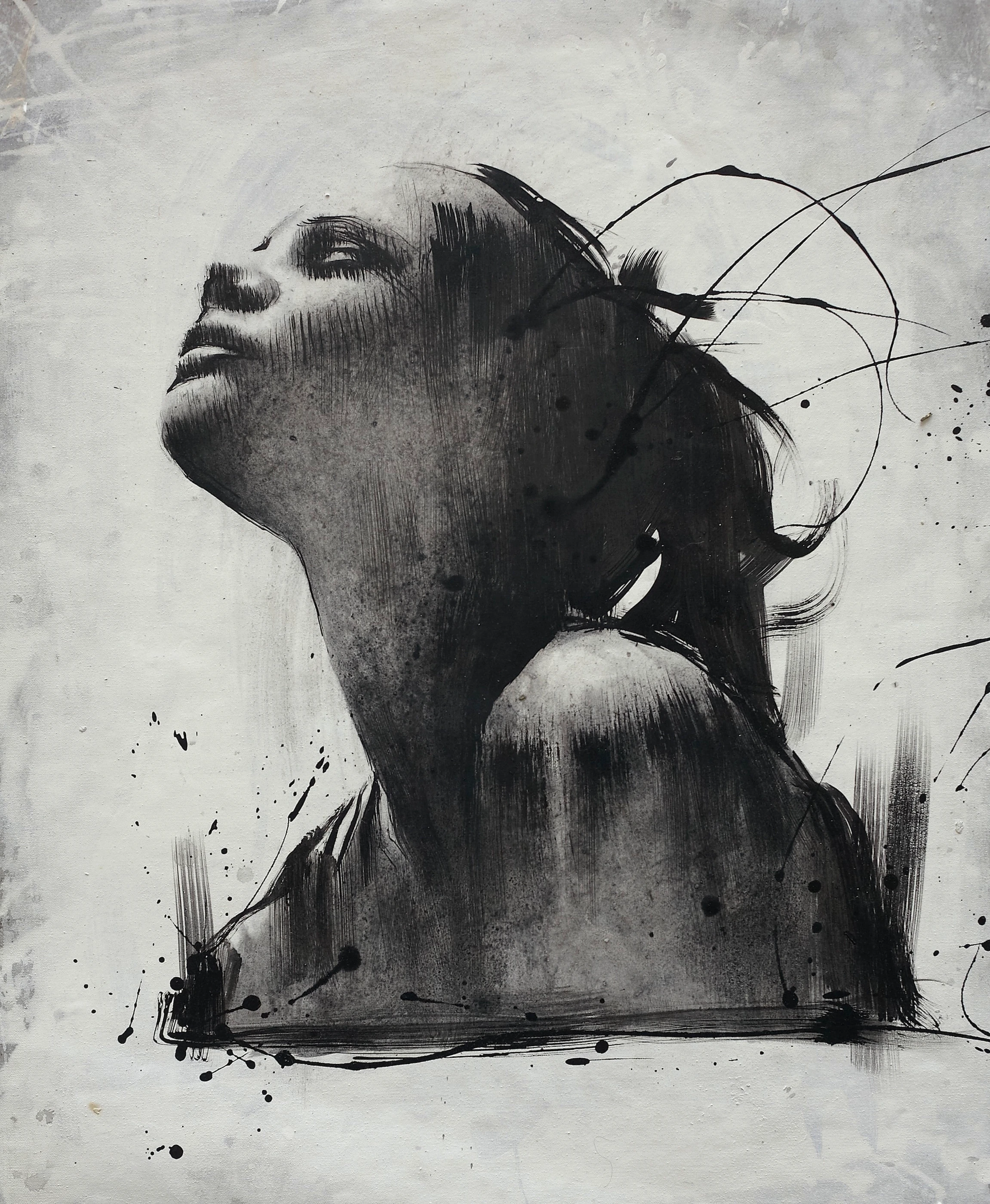
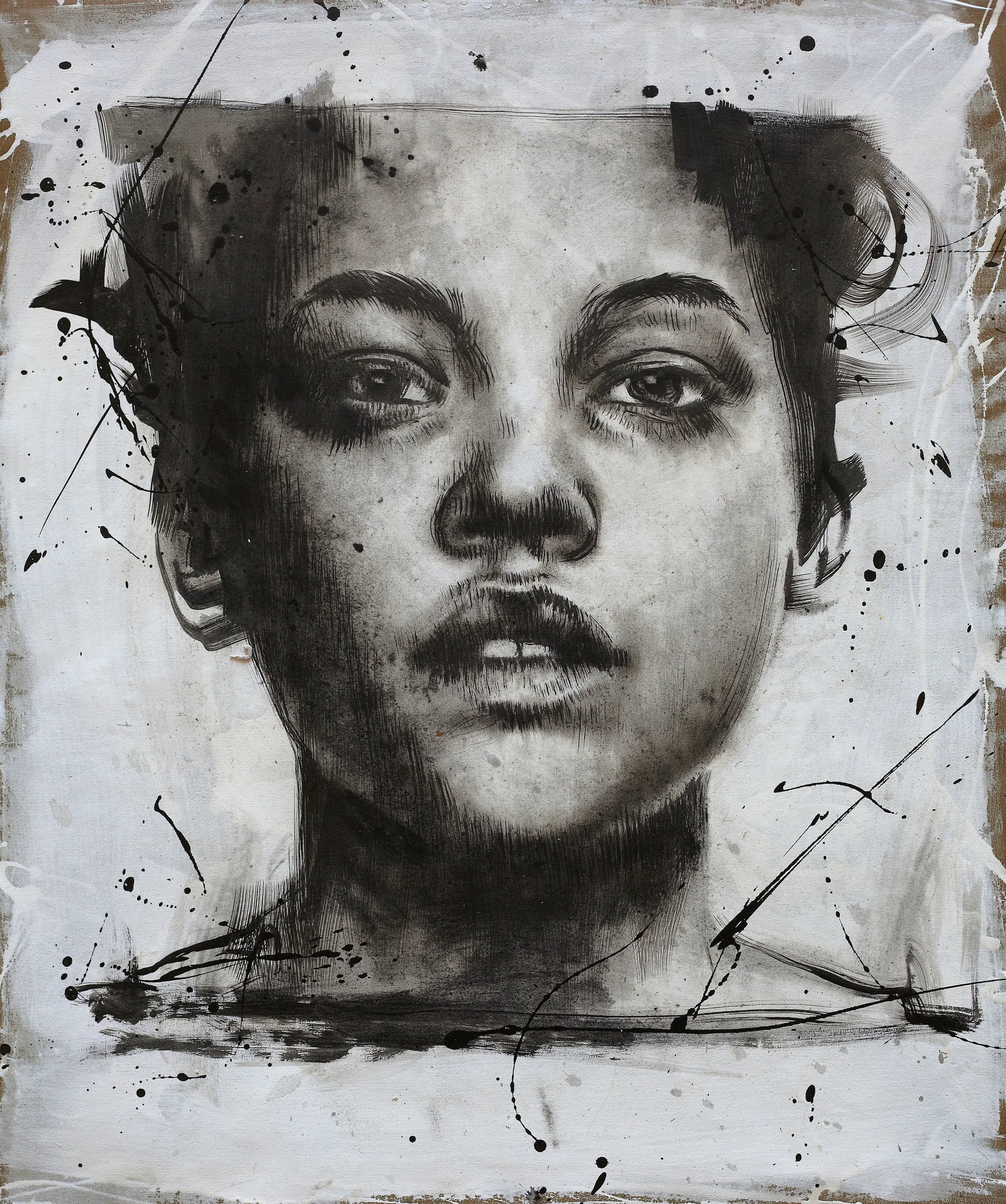
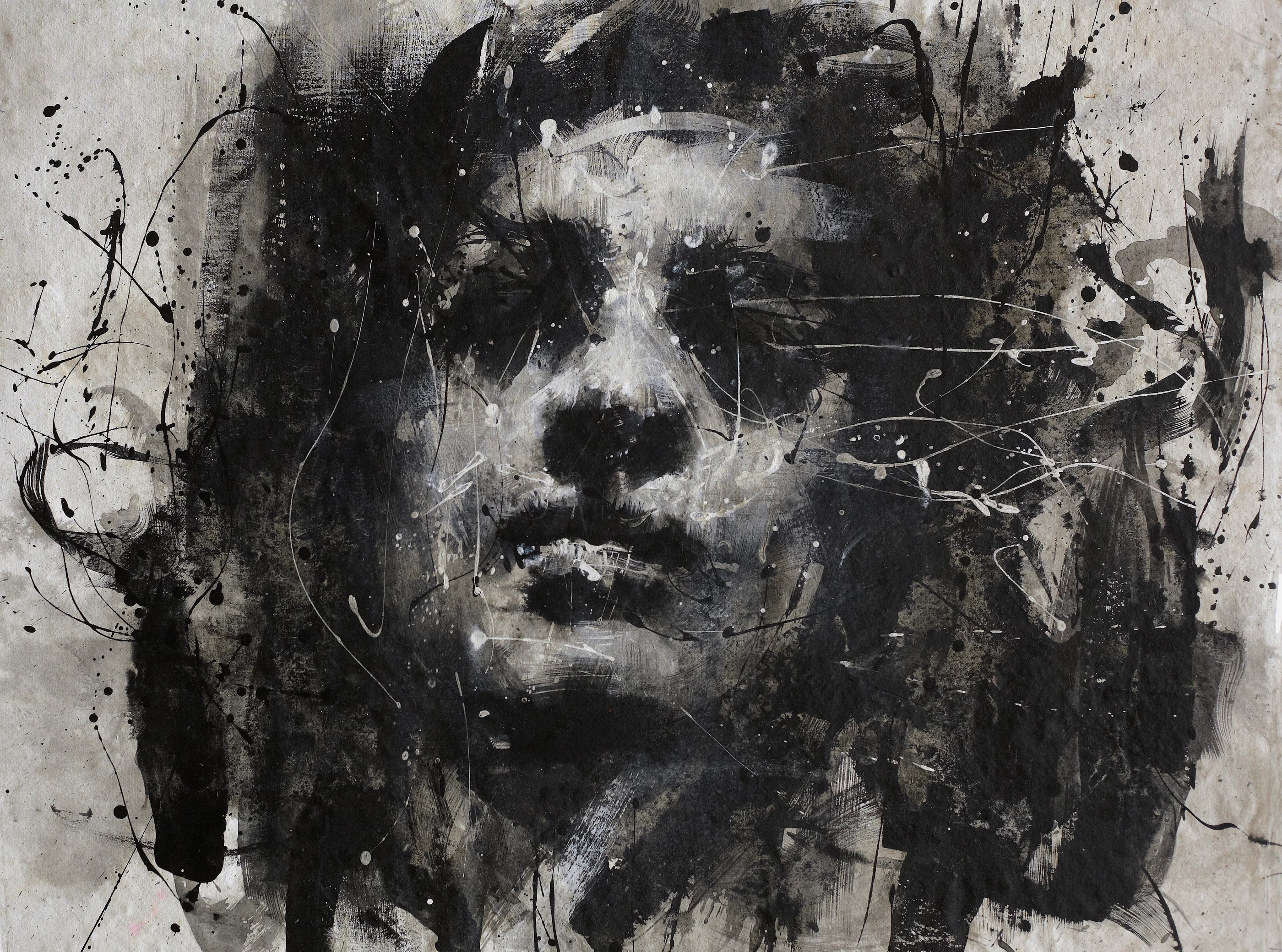
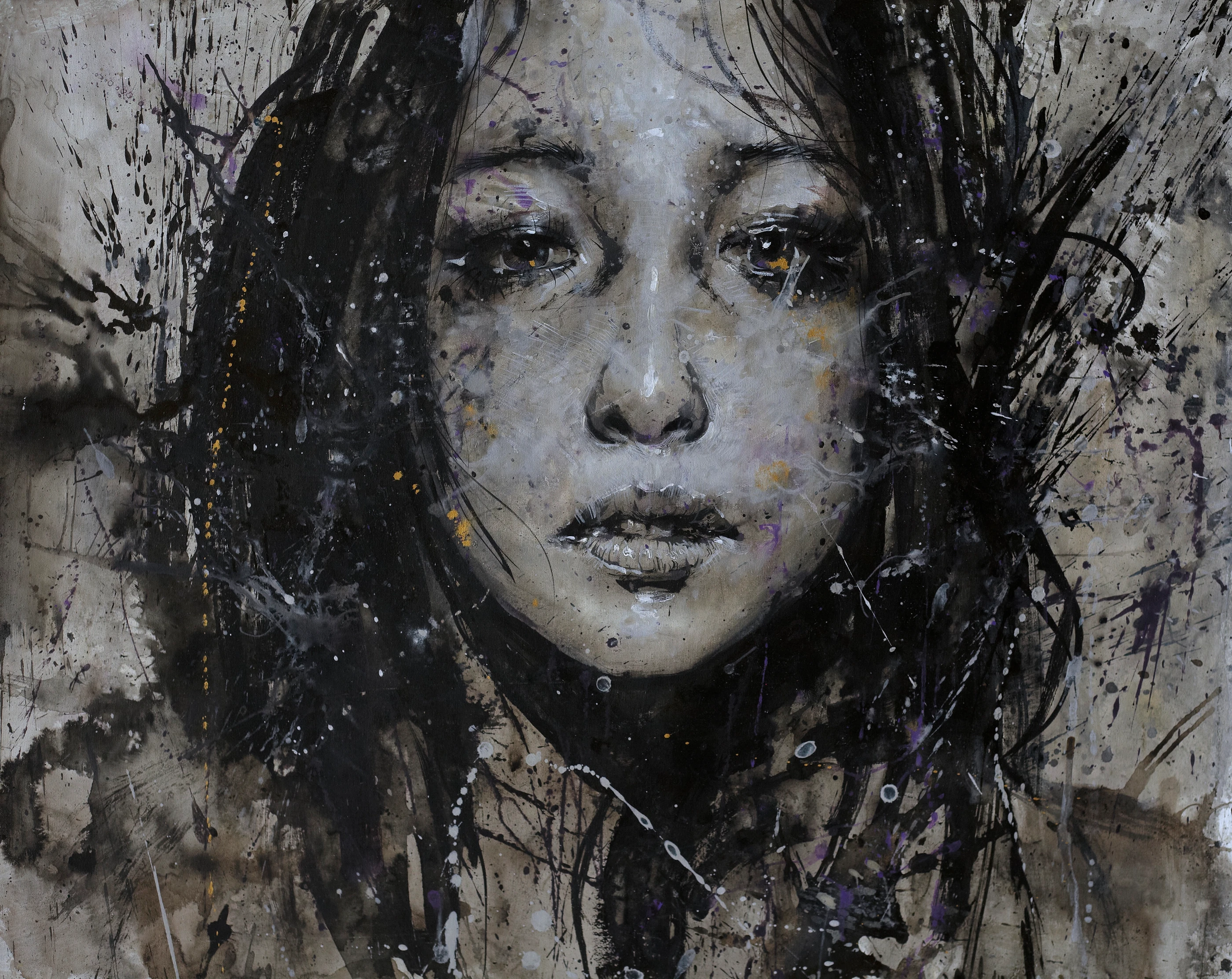
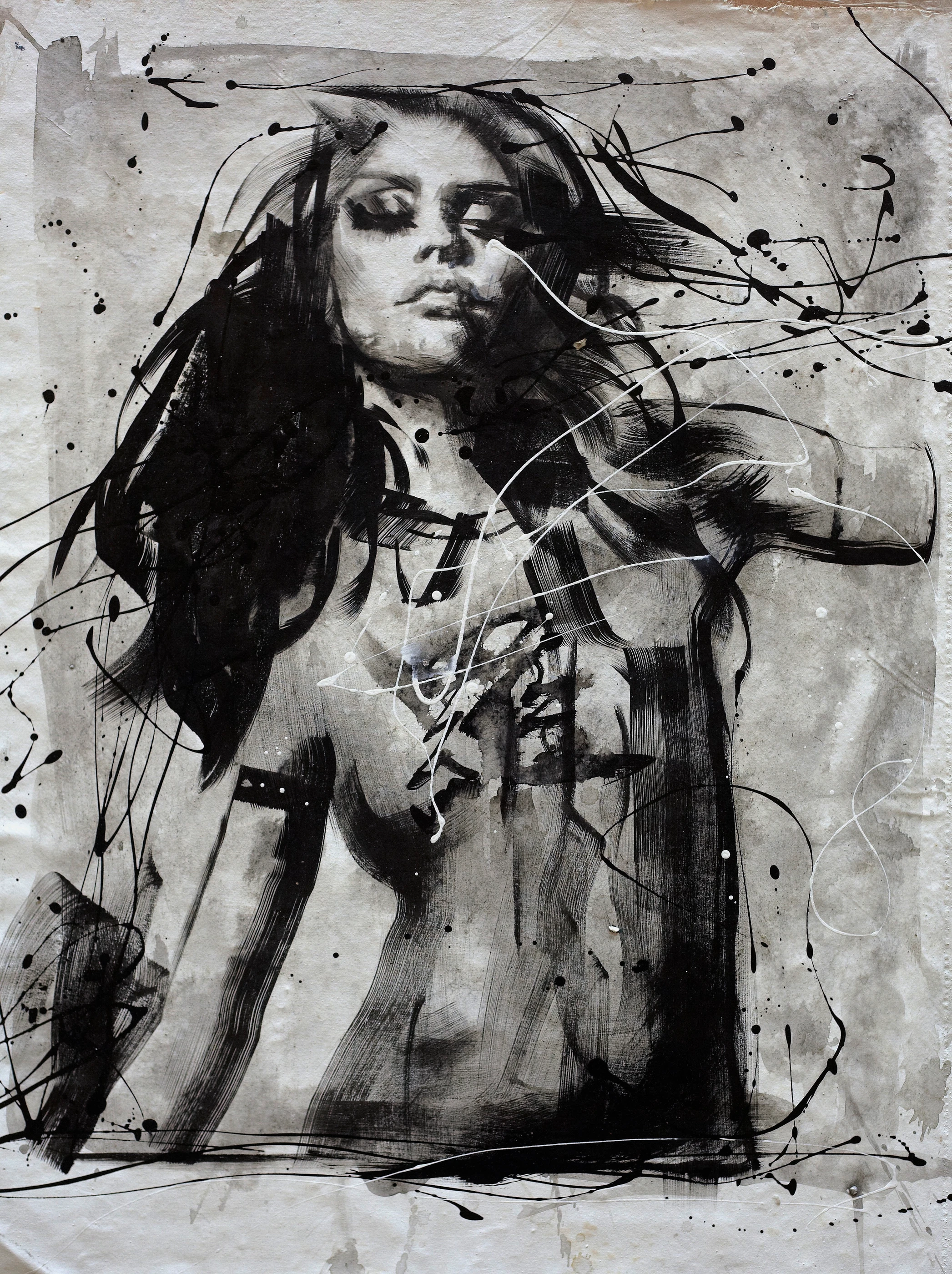
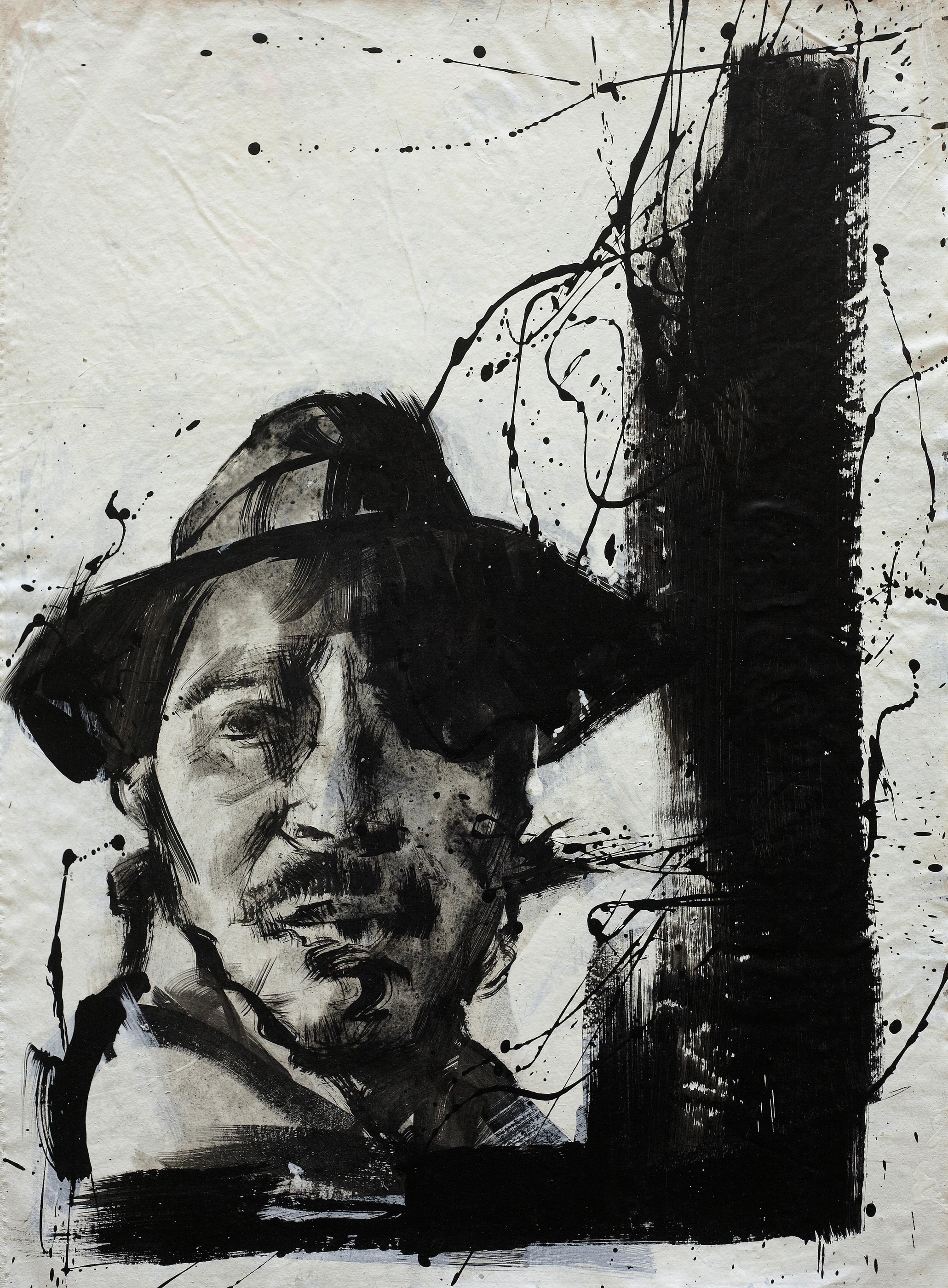
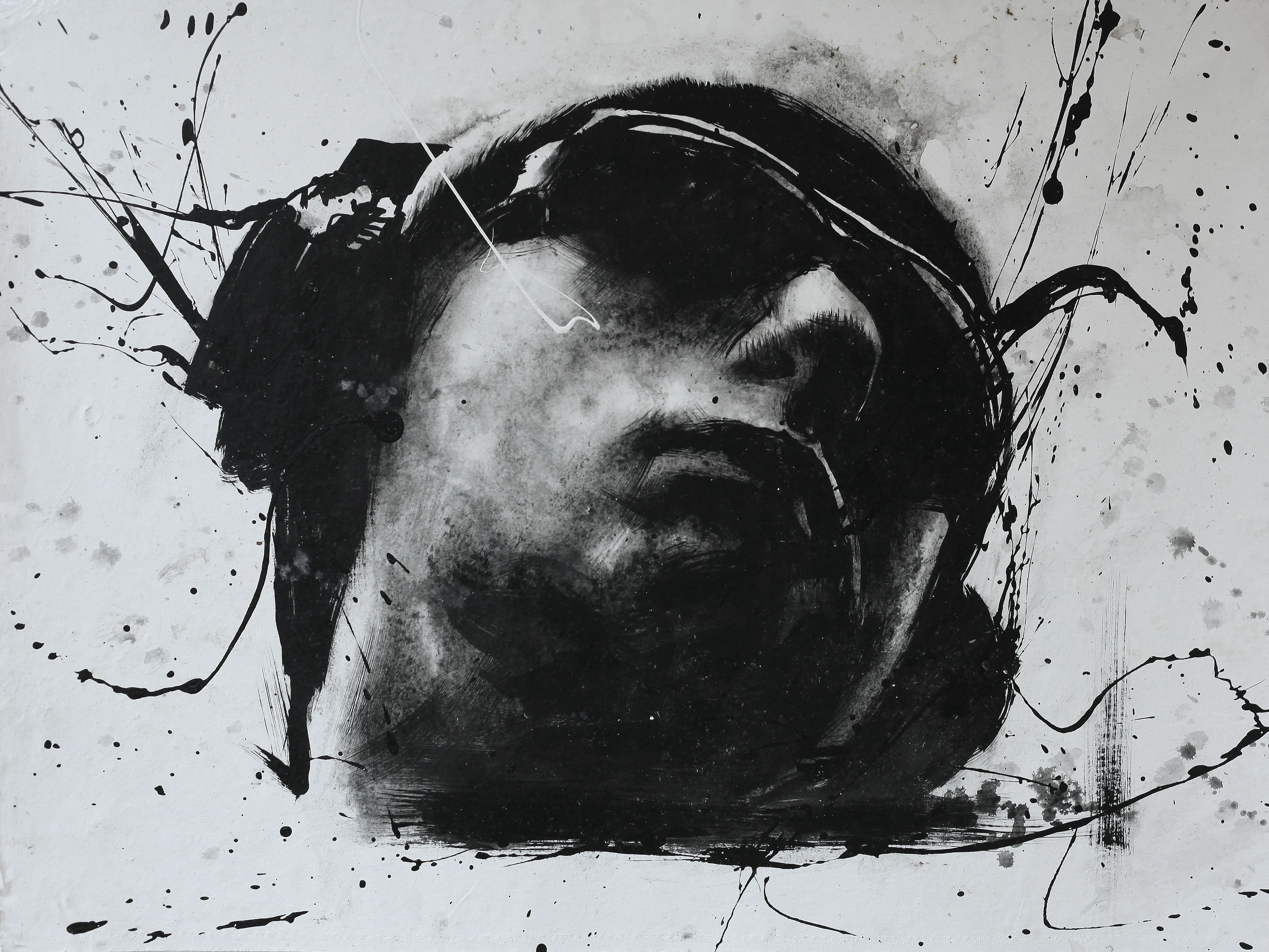
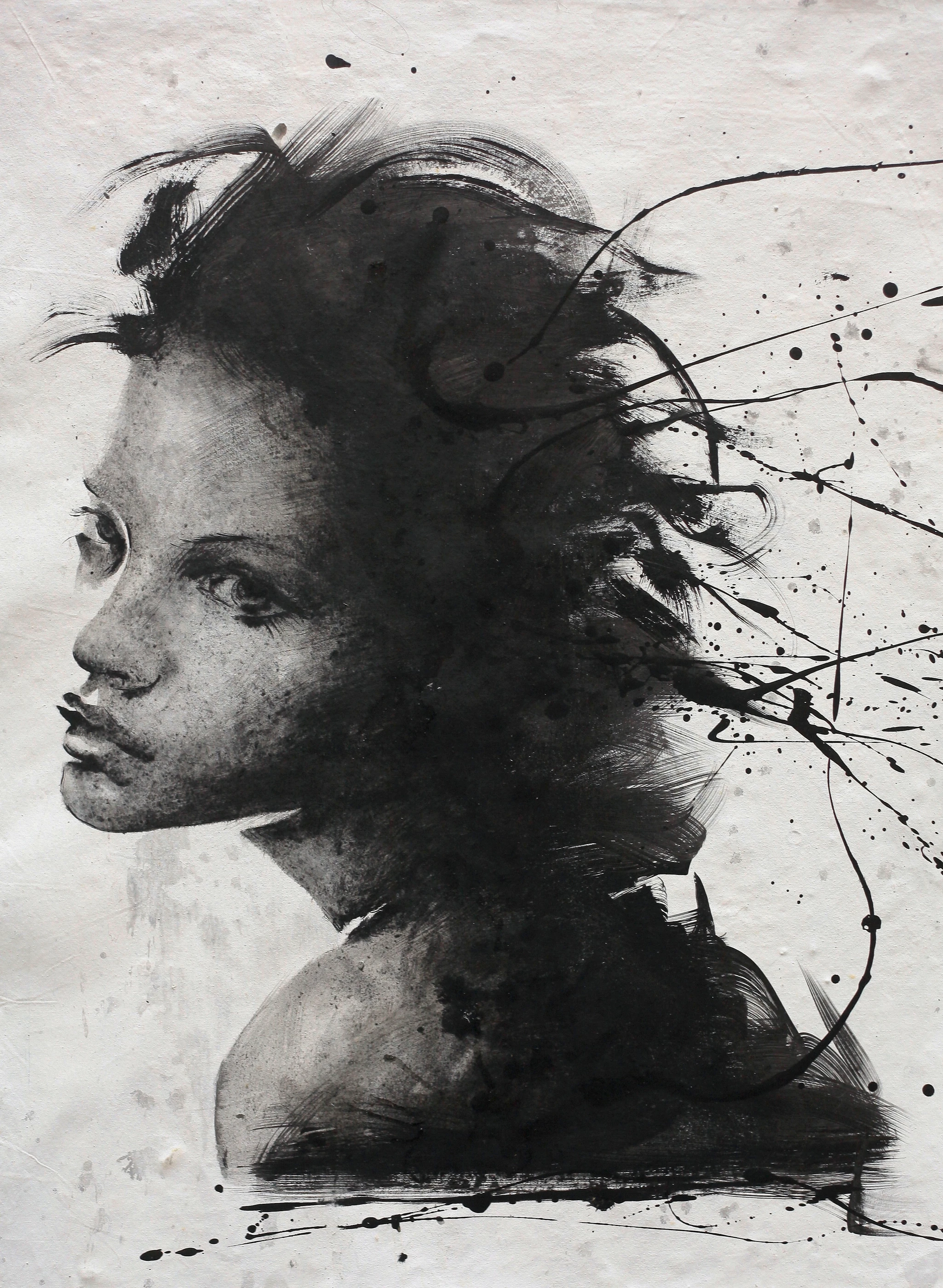
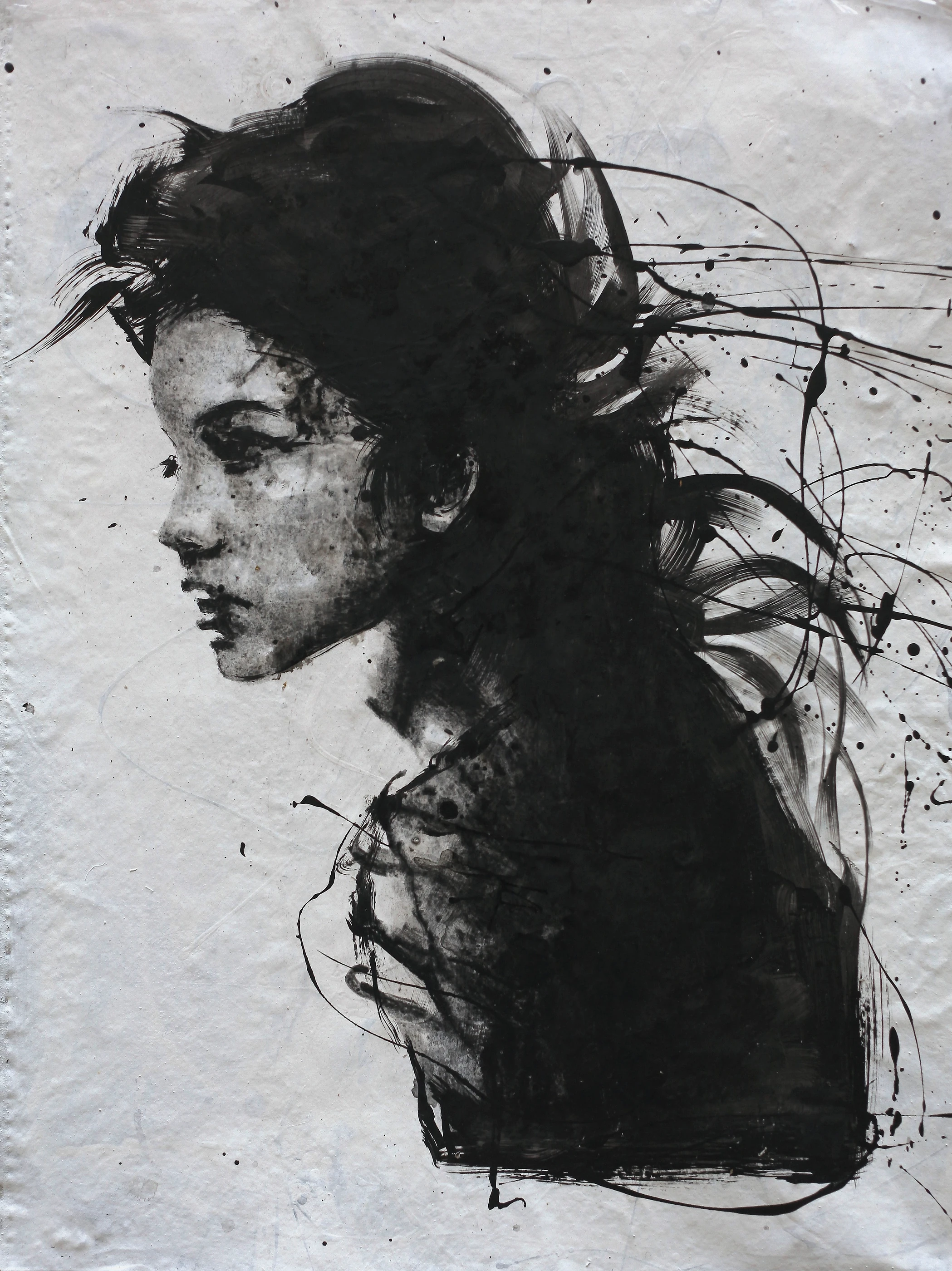
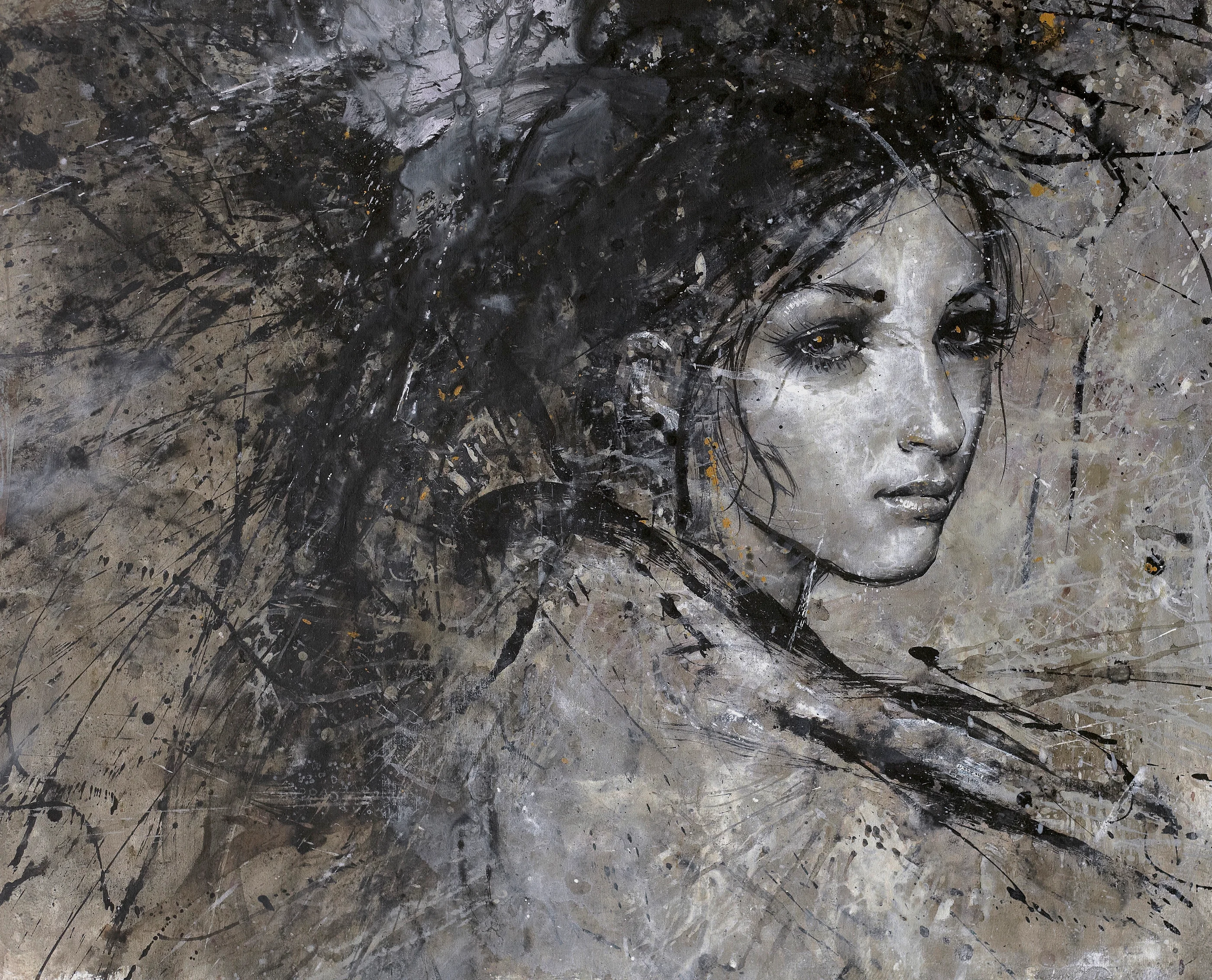
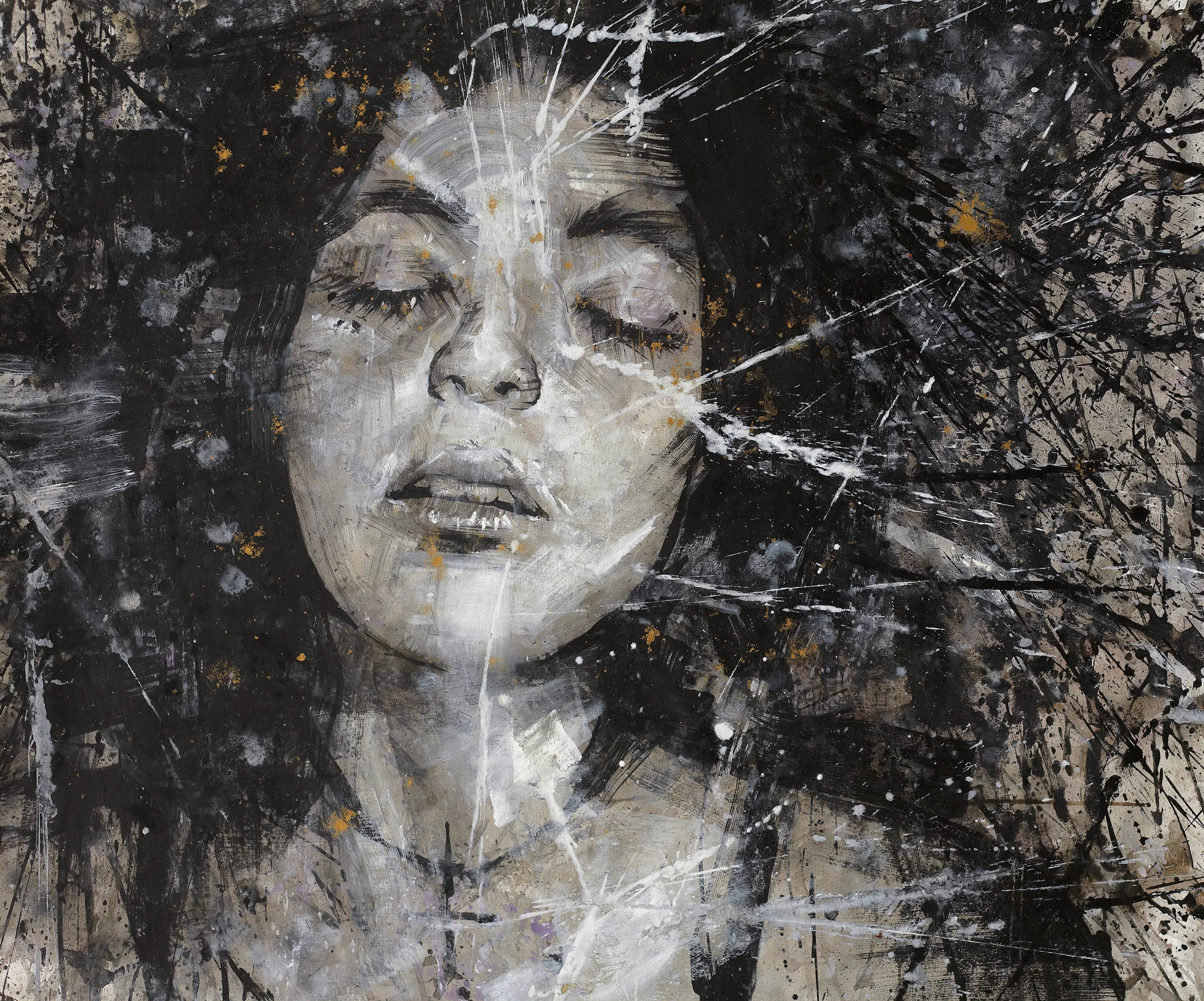
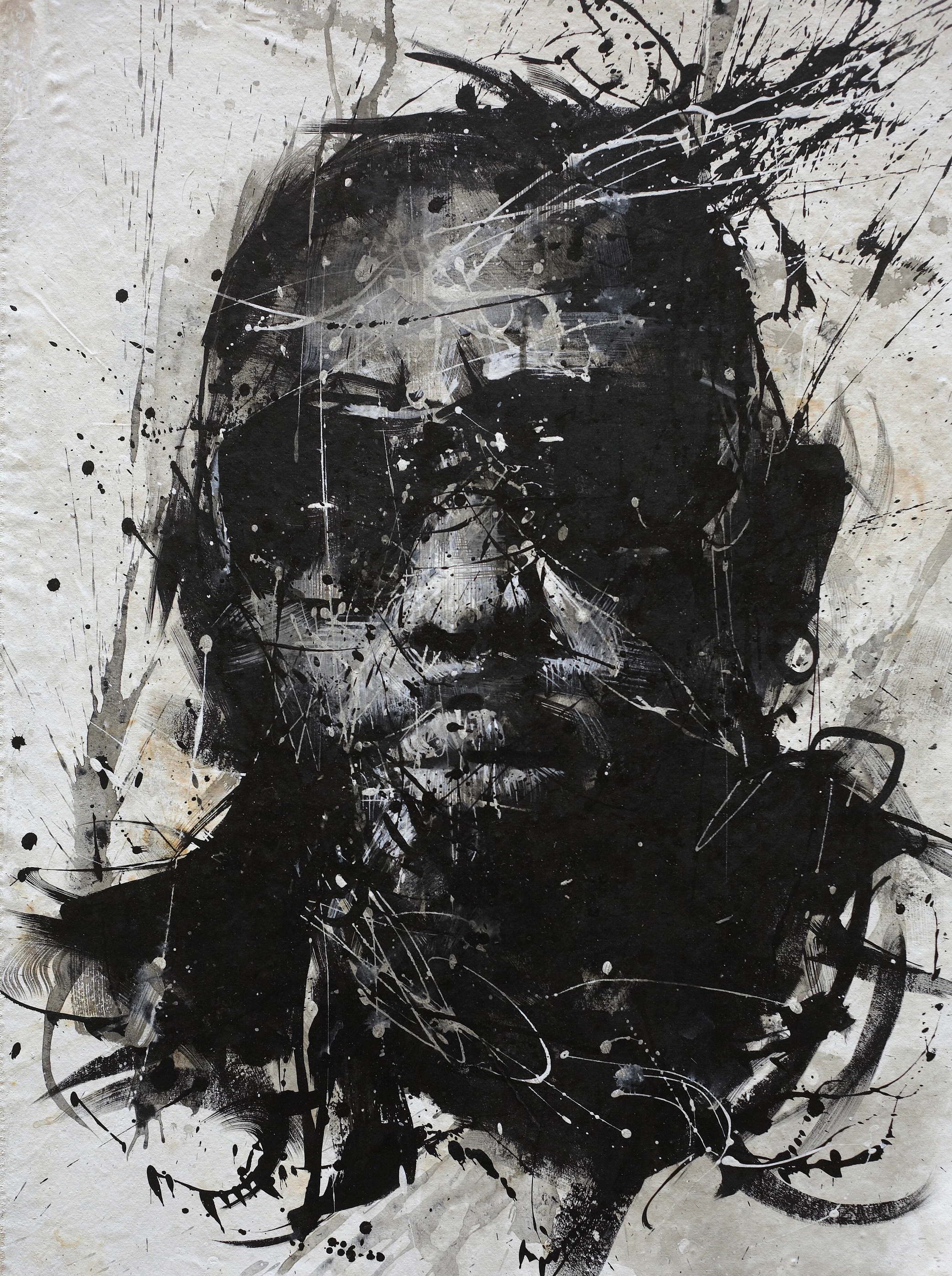
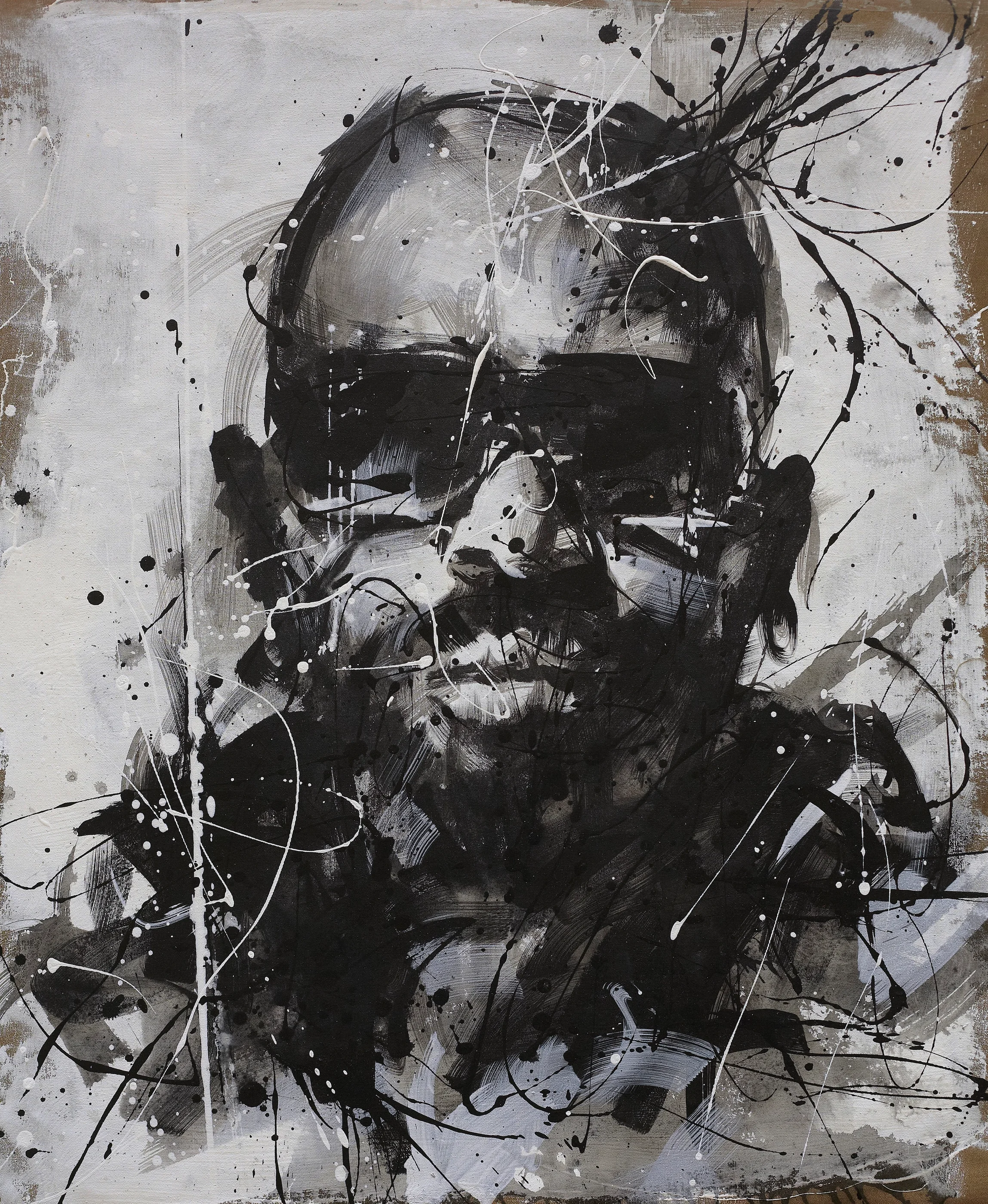
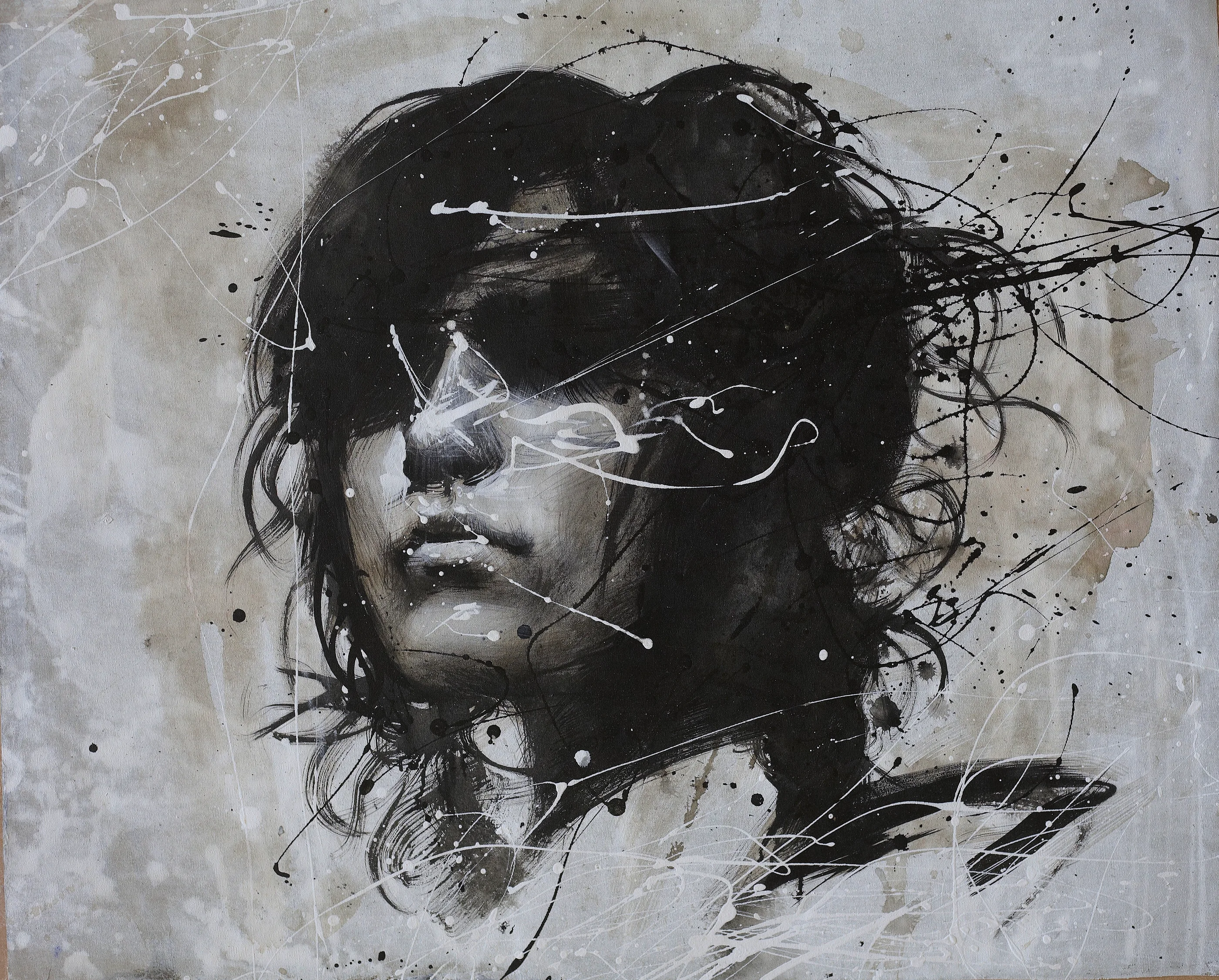
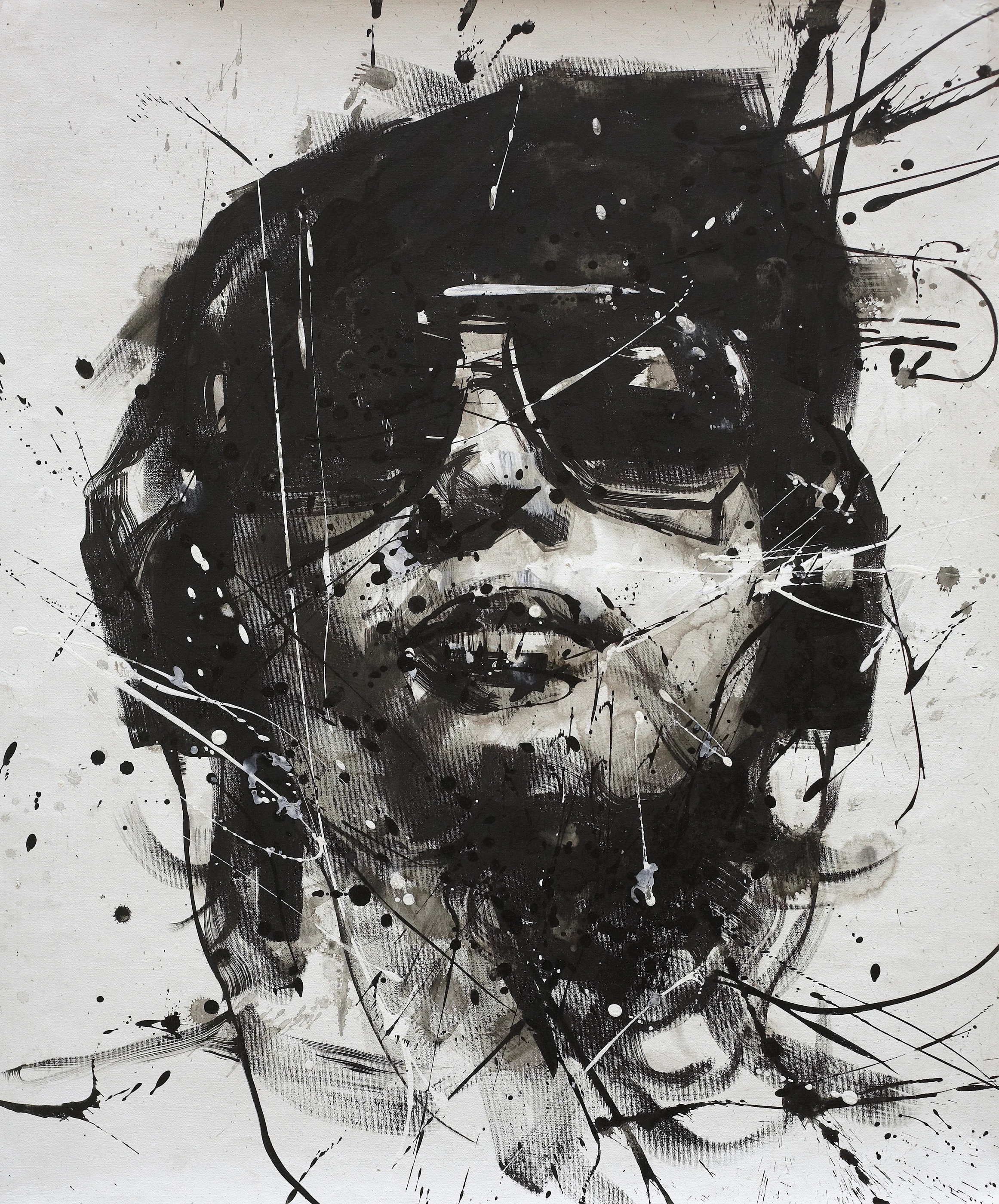
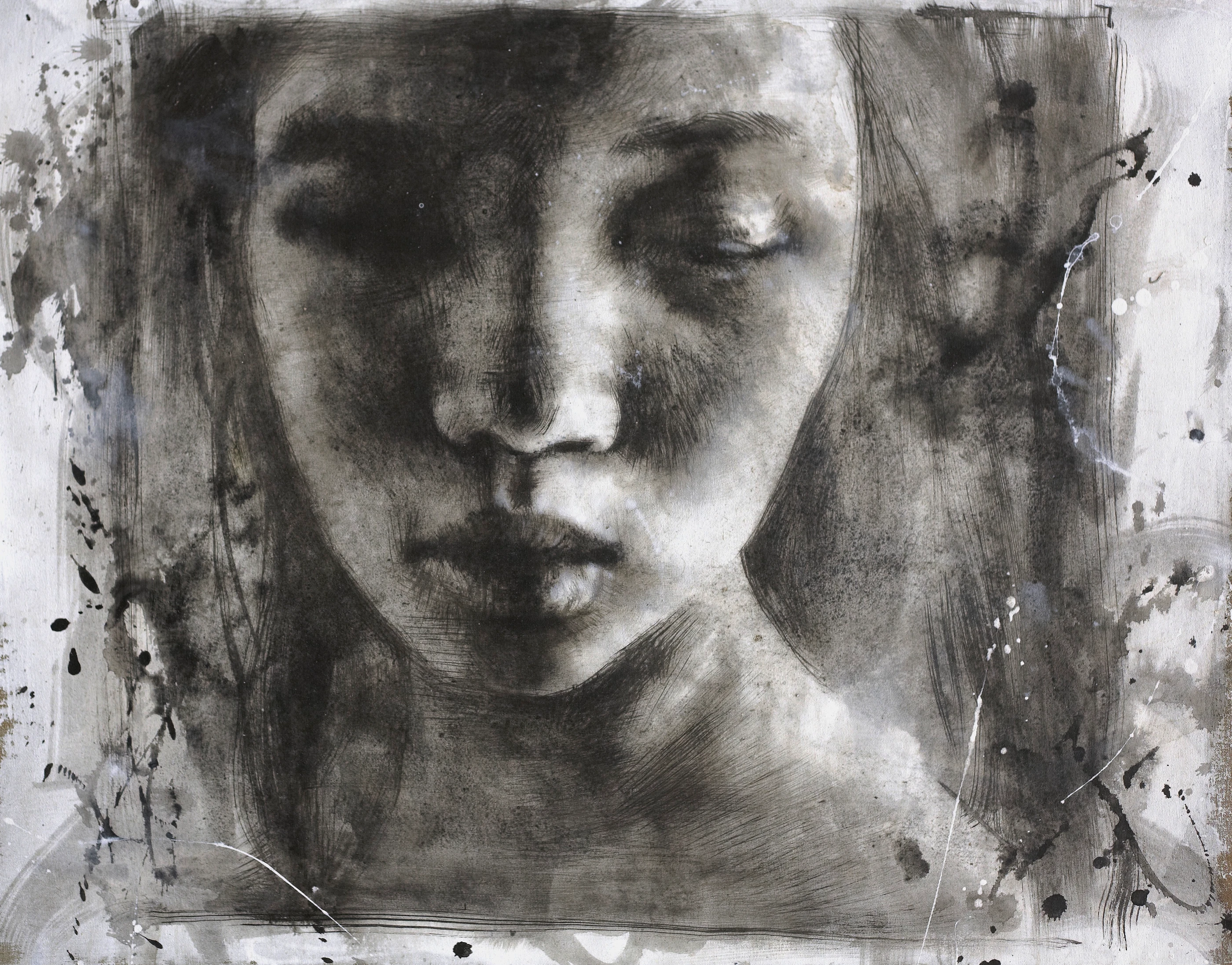
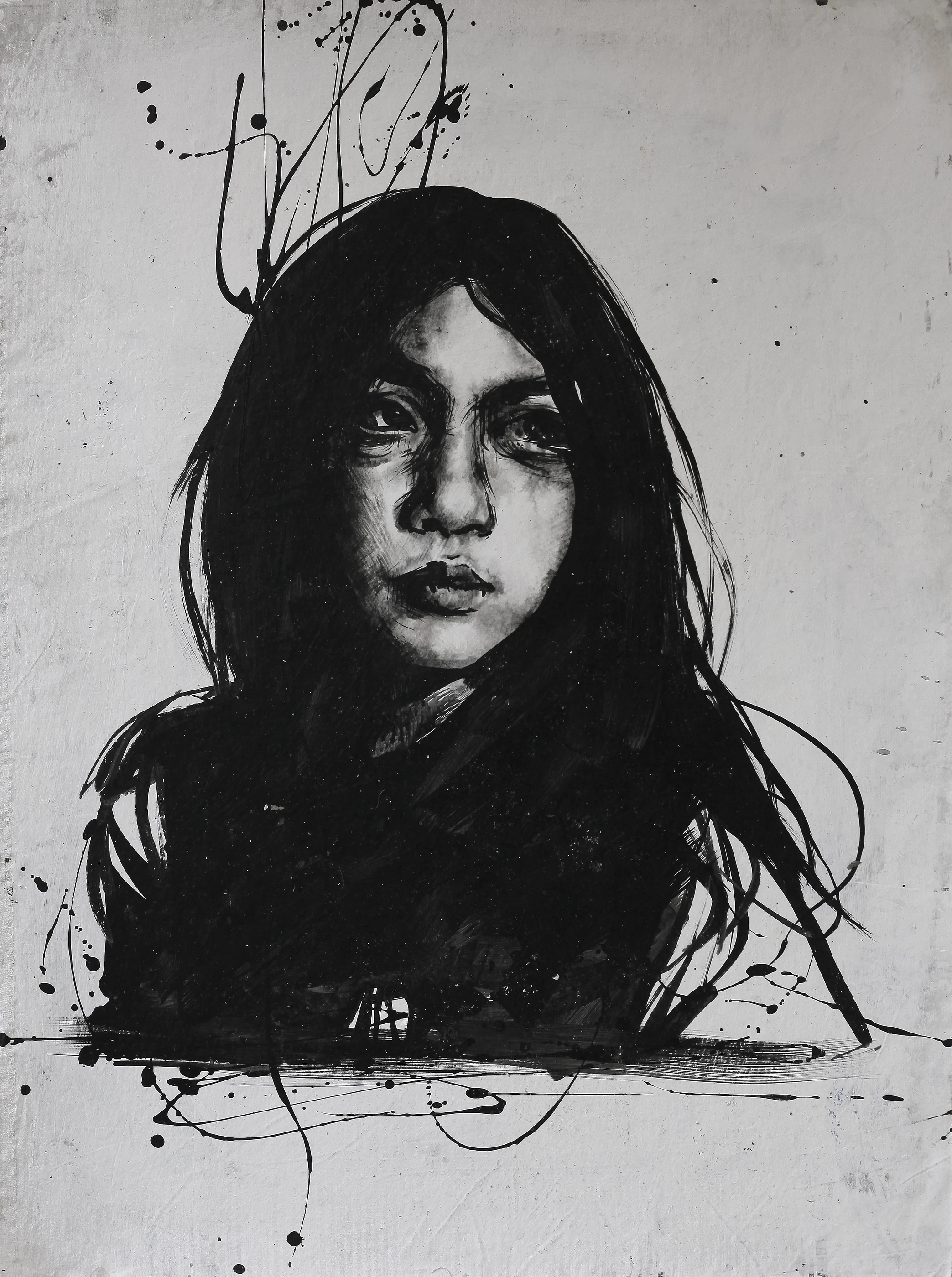
Berlin, in 2011, pulled Lo Chan Peng out of everything familiar. A city torn open and stitched back together by history, its streets covered in graffiti; in that street language of stencils, spray paint and dodging the police by night, he recognised the shadow of Eastern ink.
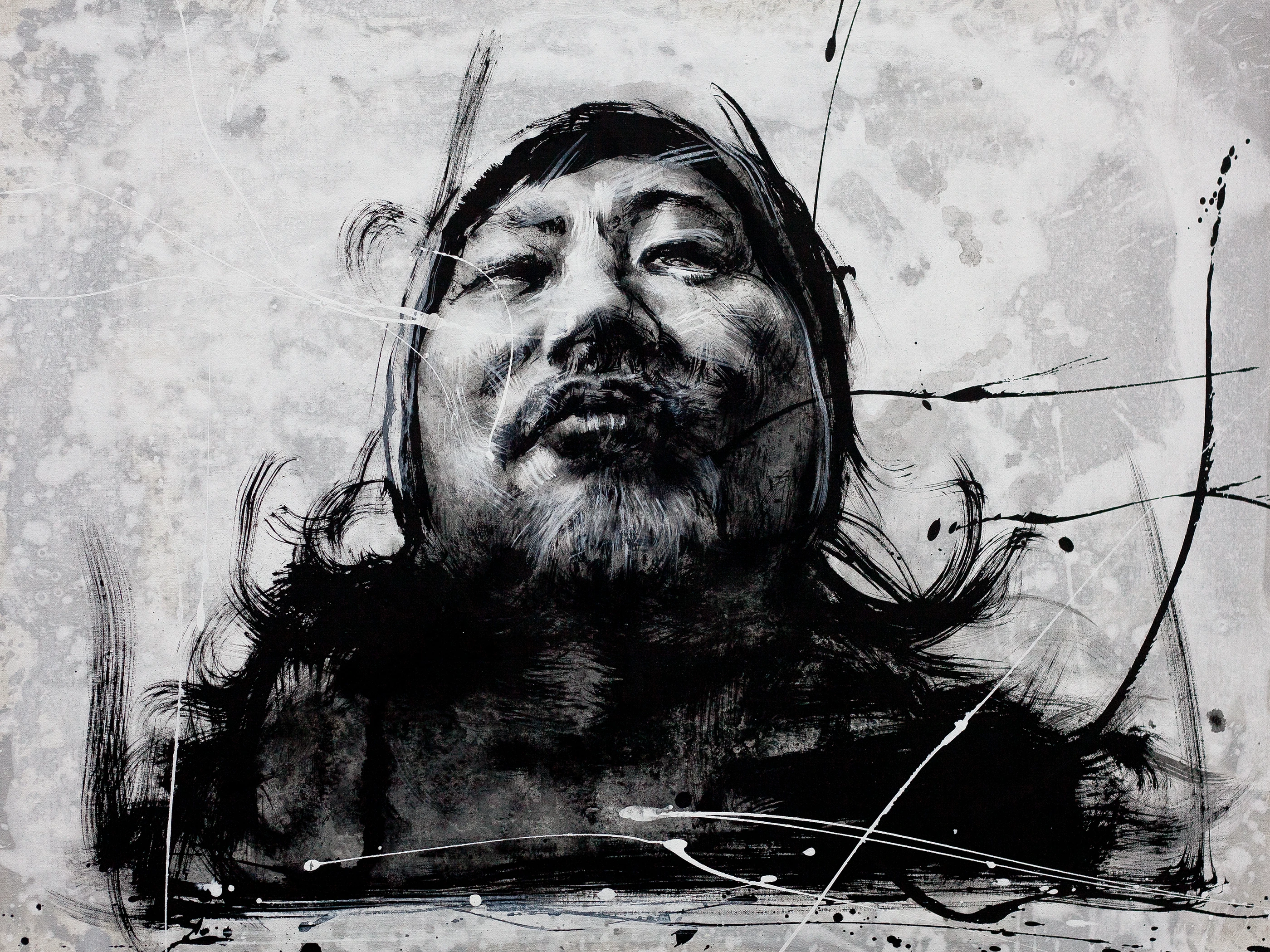
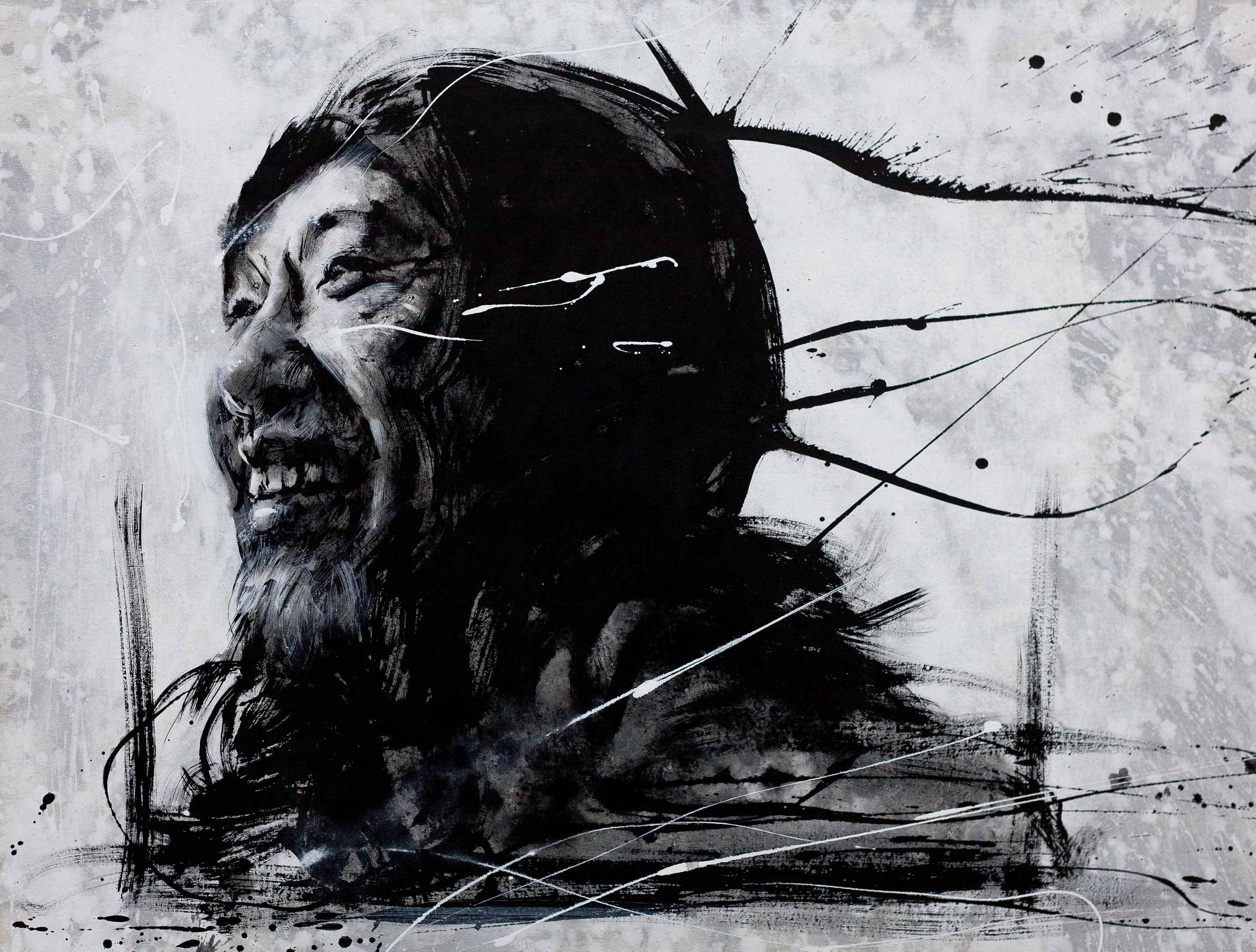
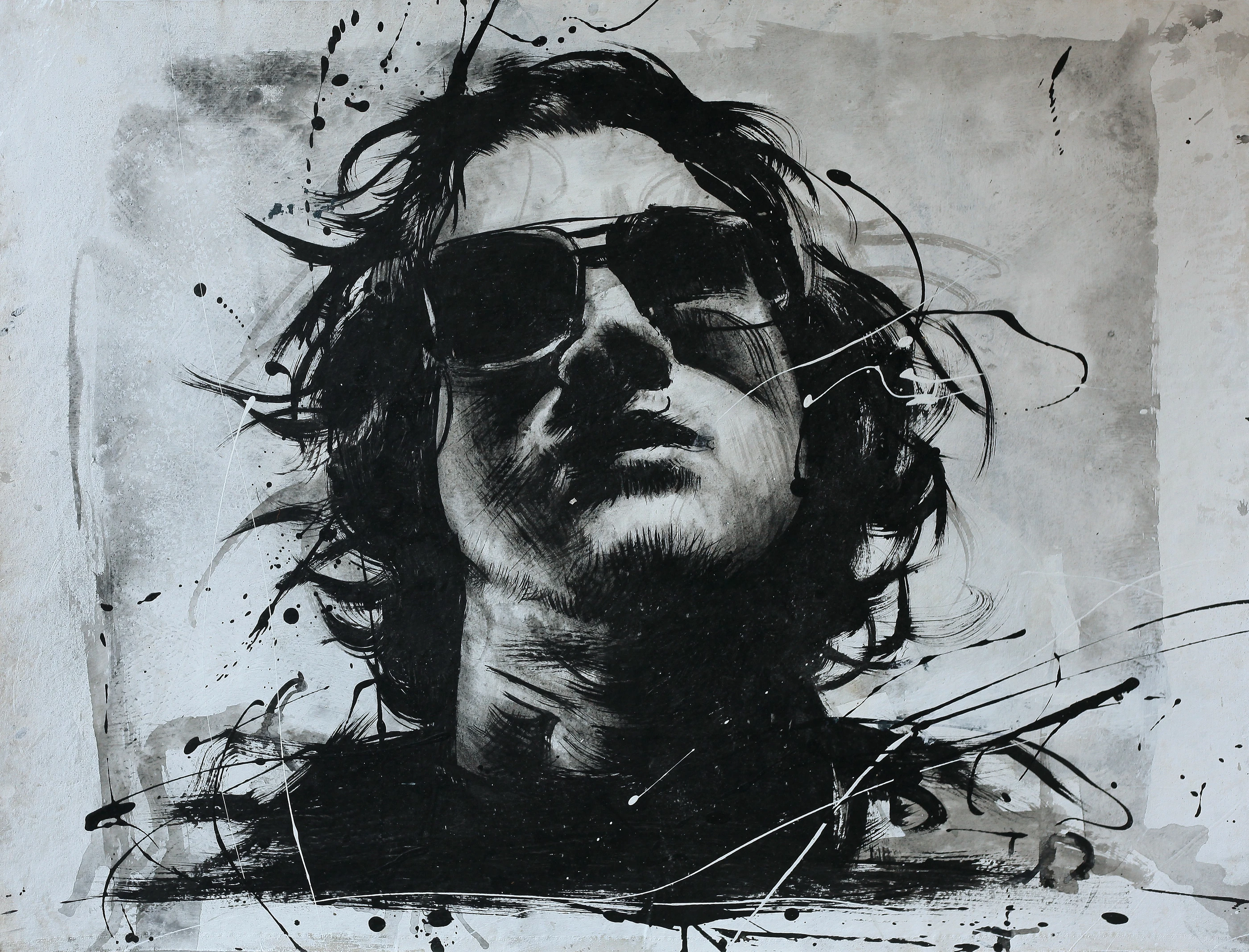
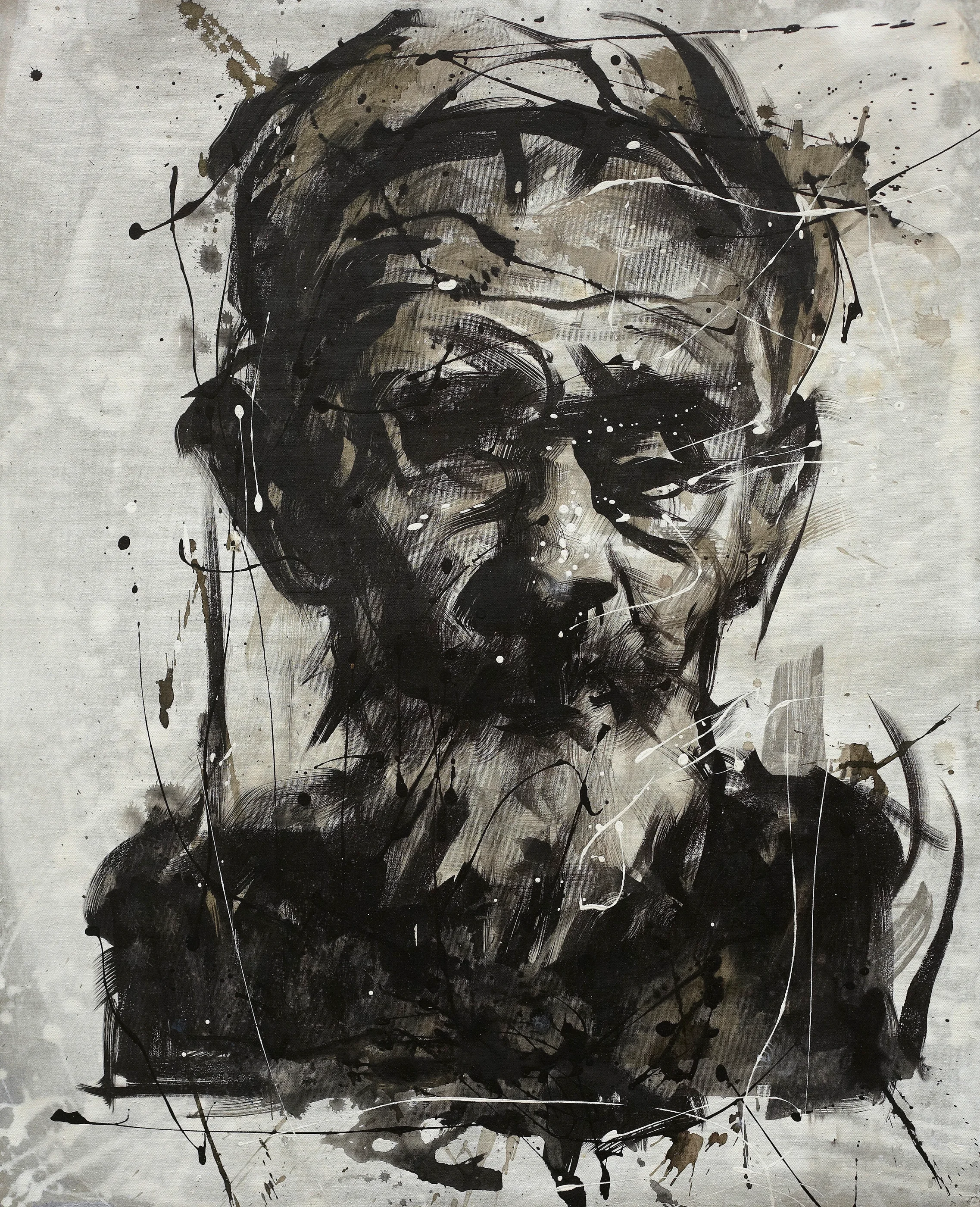
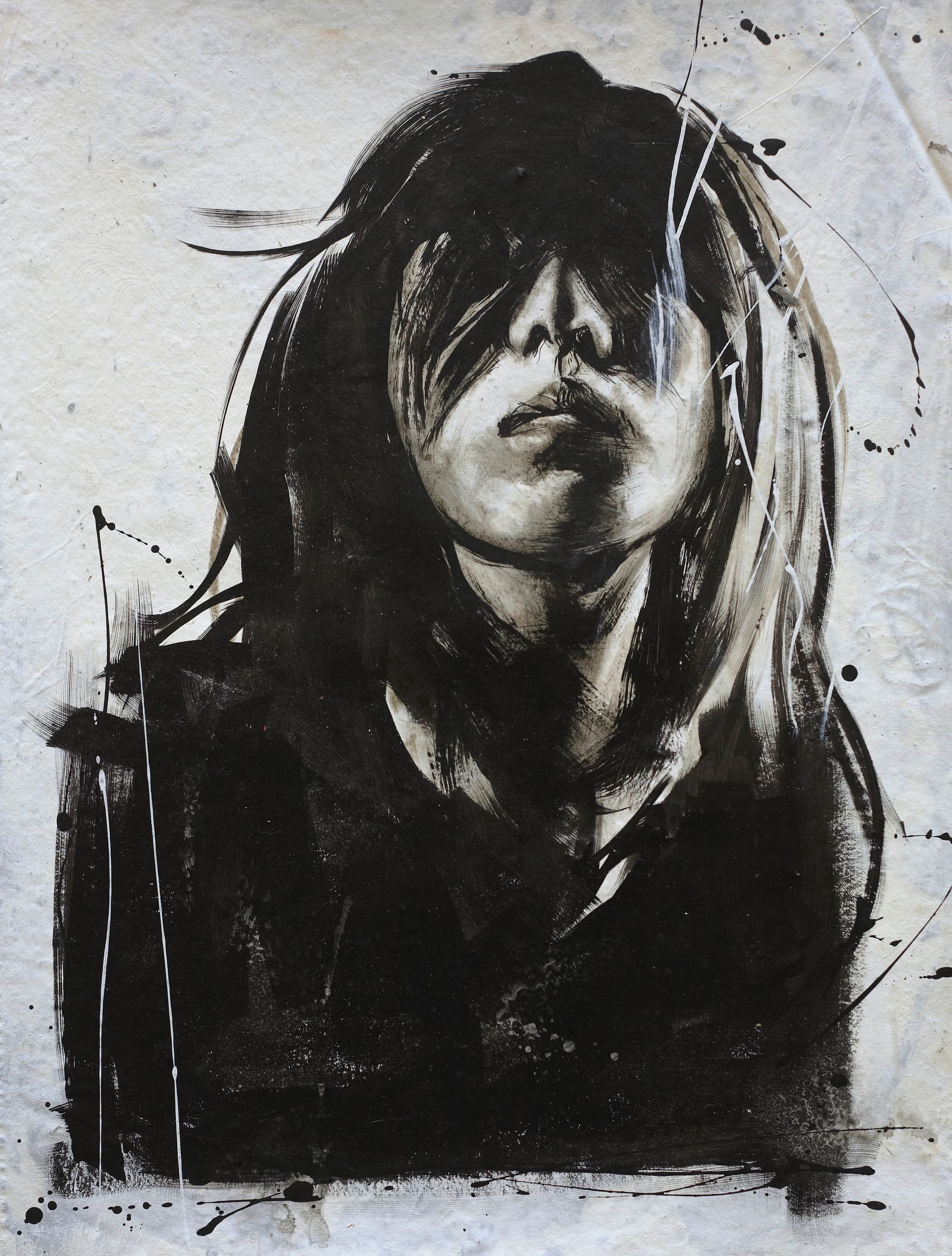
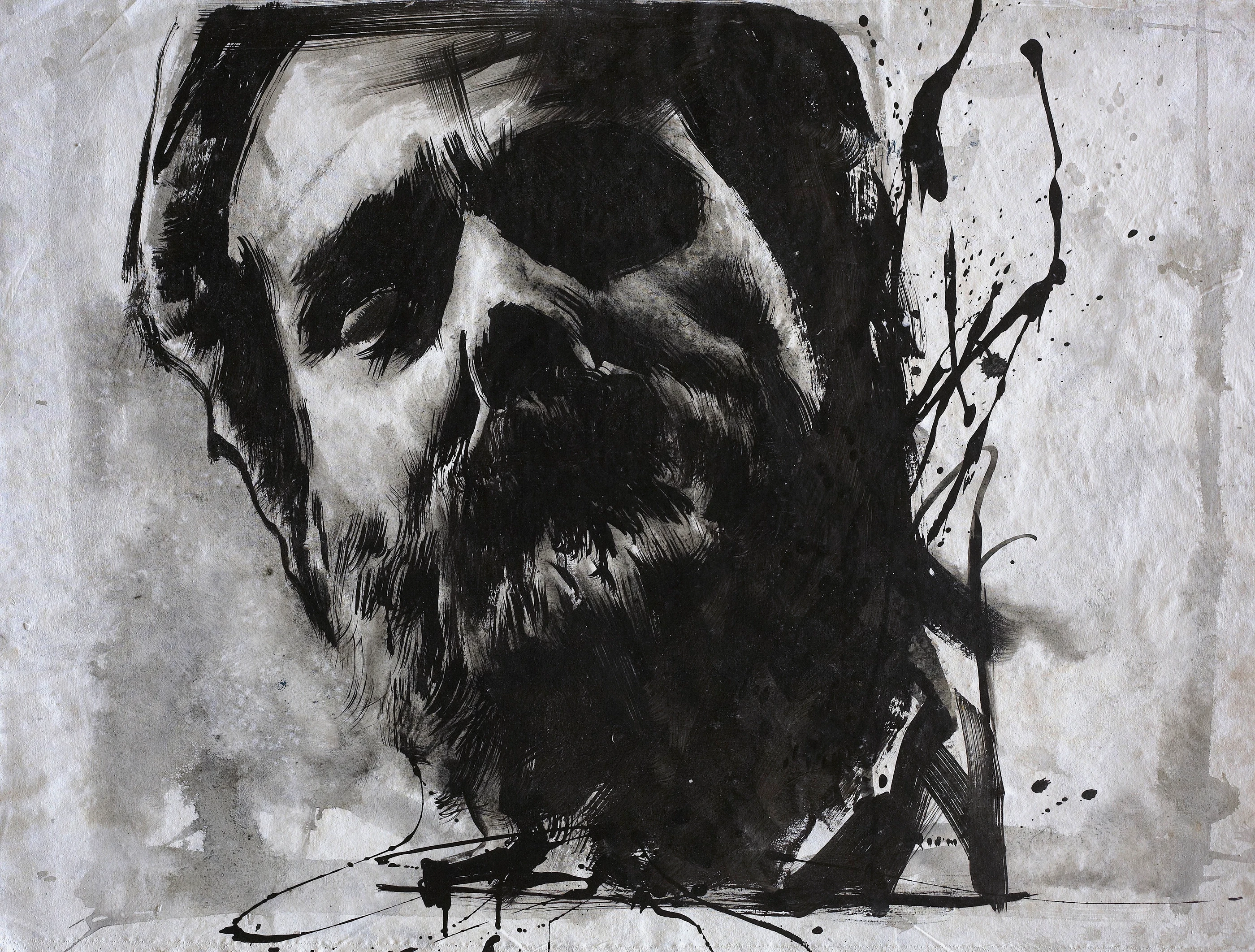
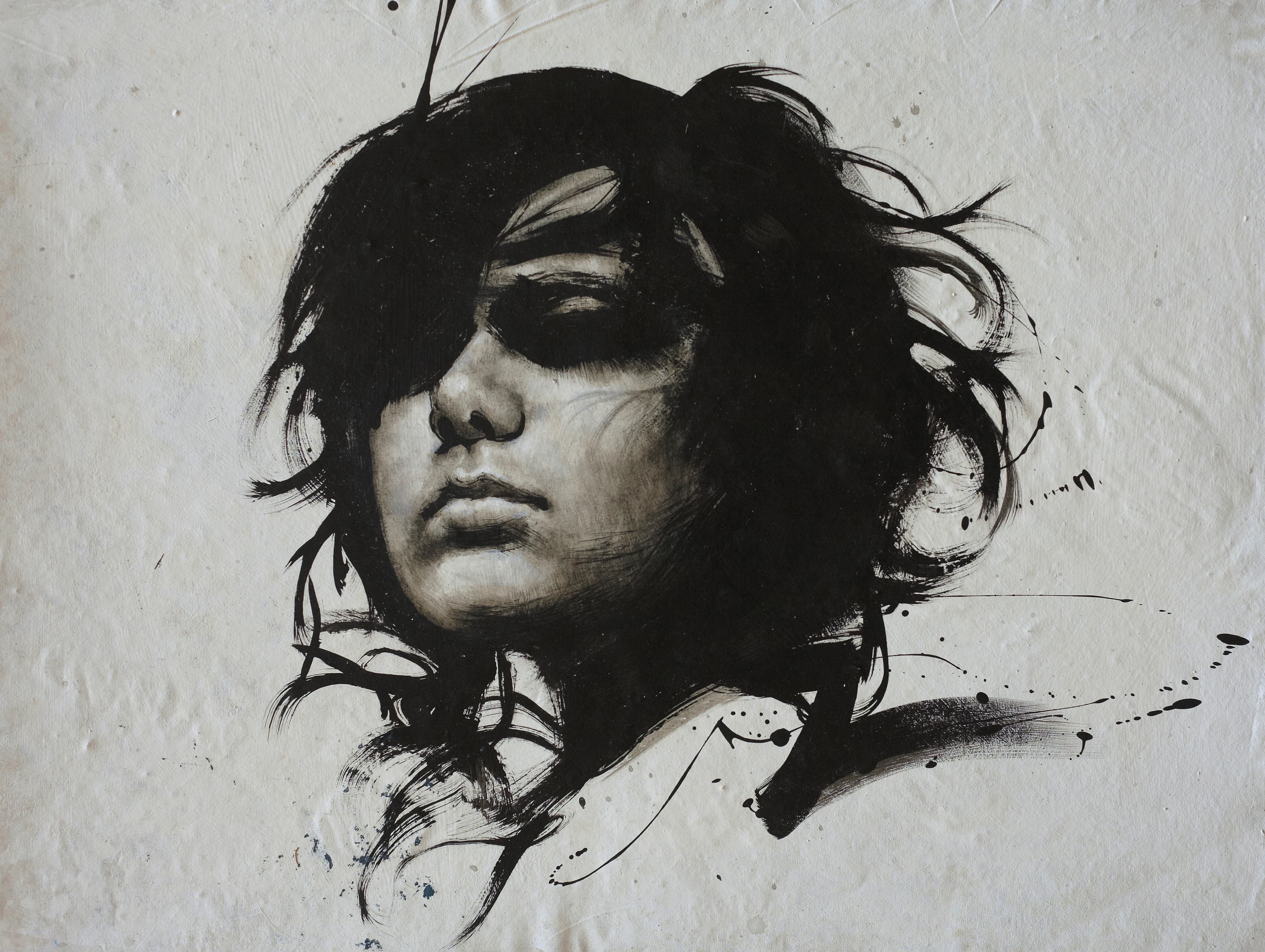
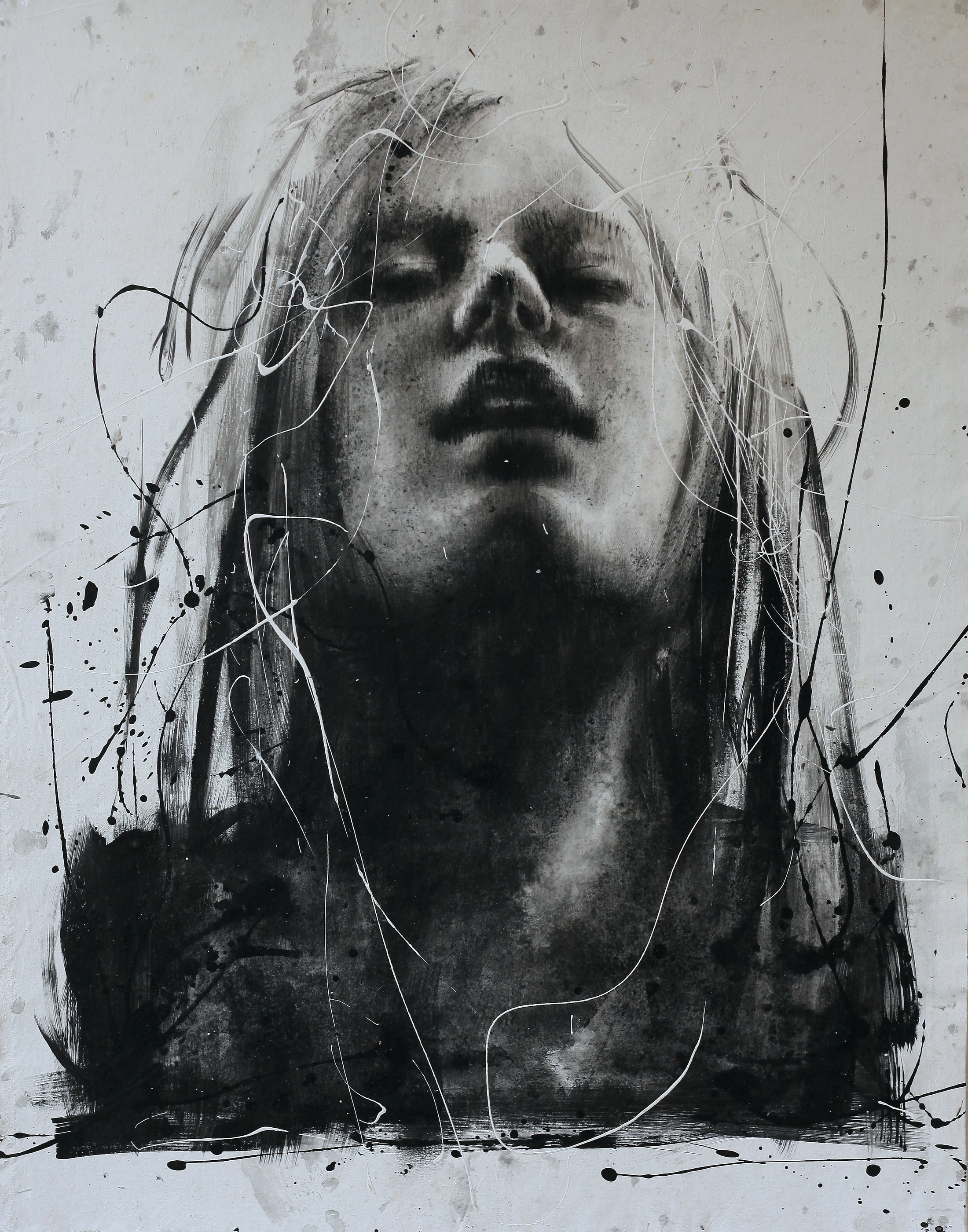
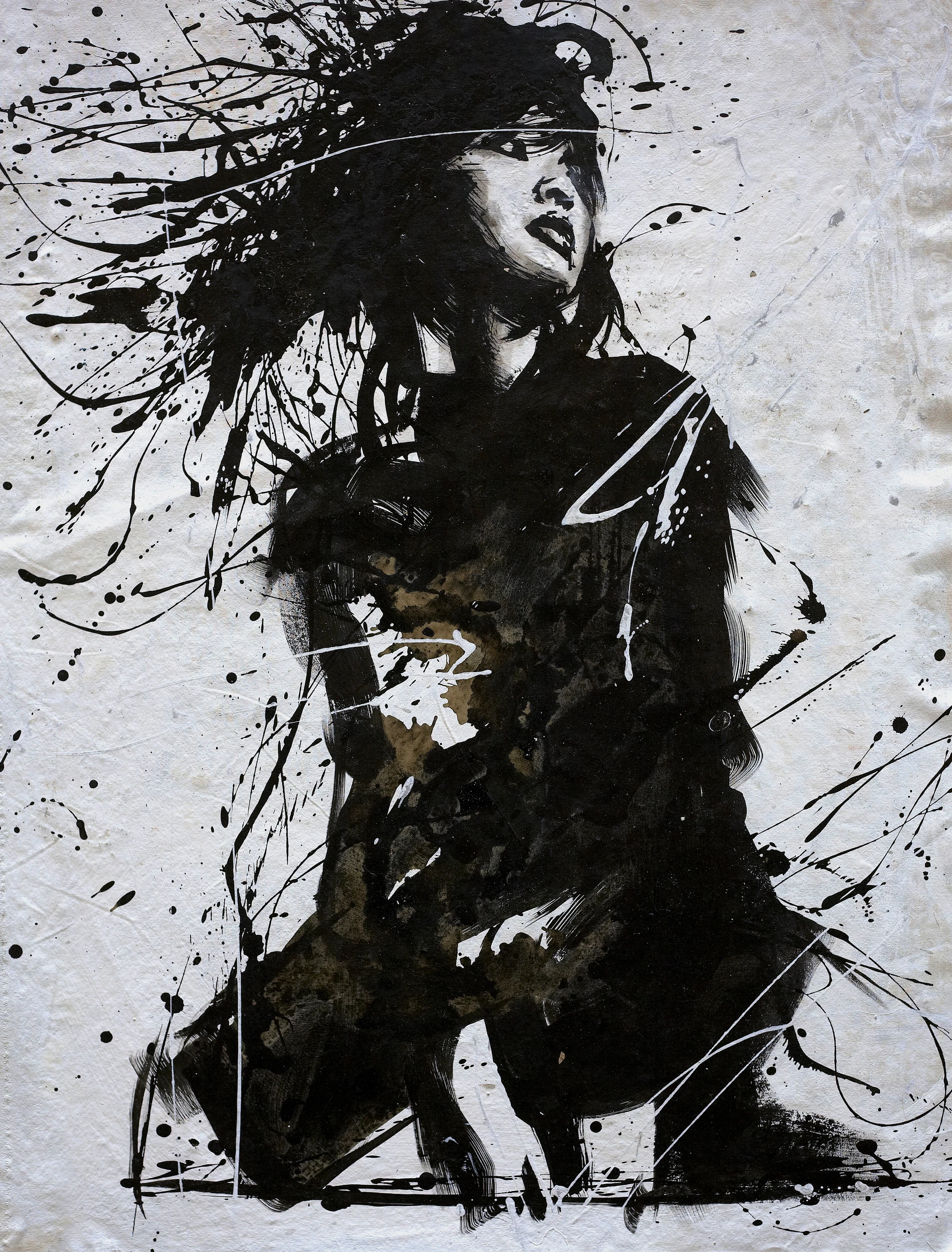
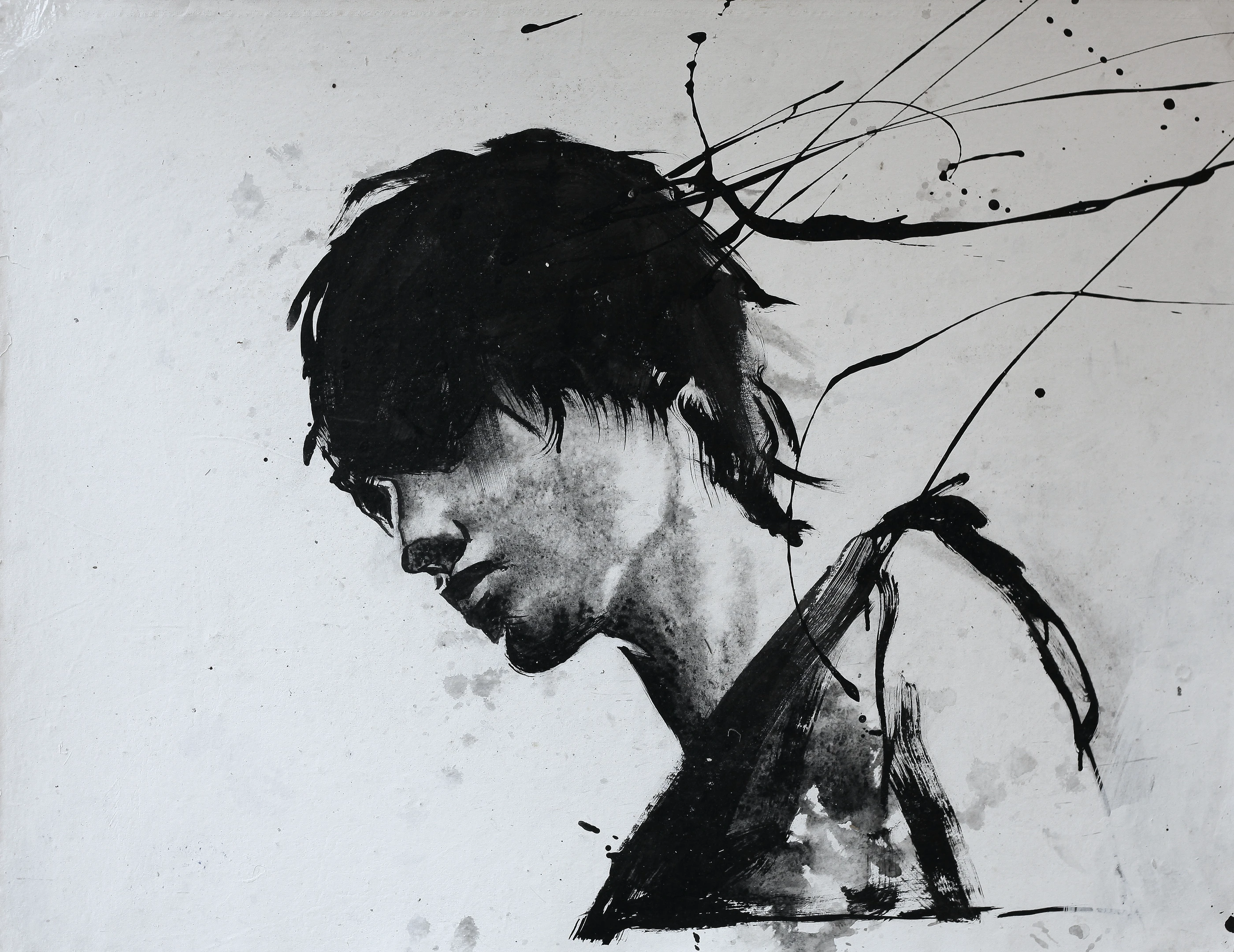
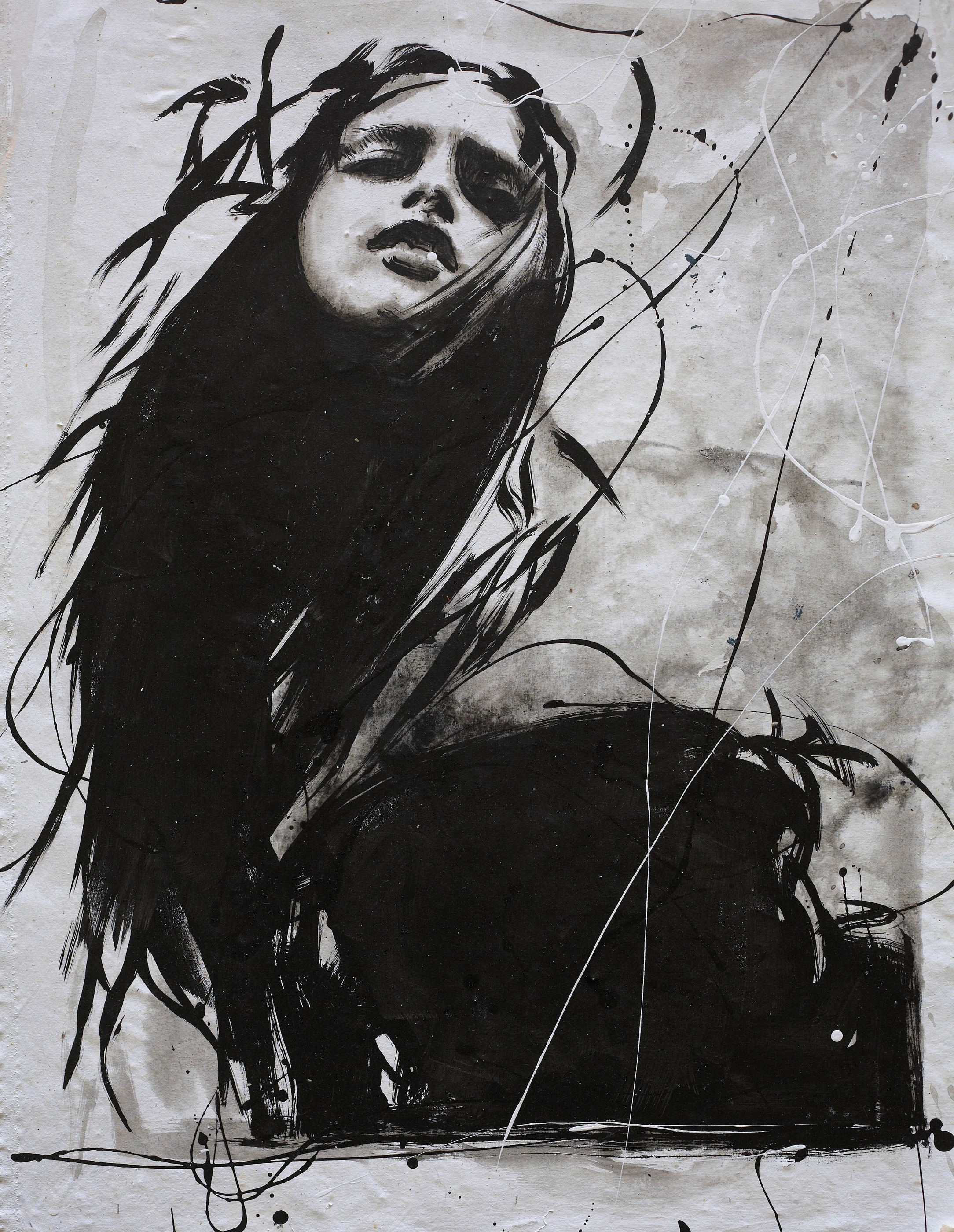
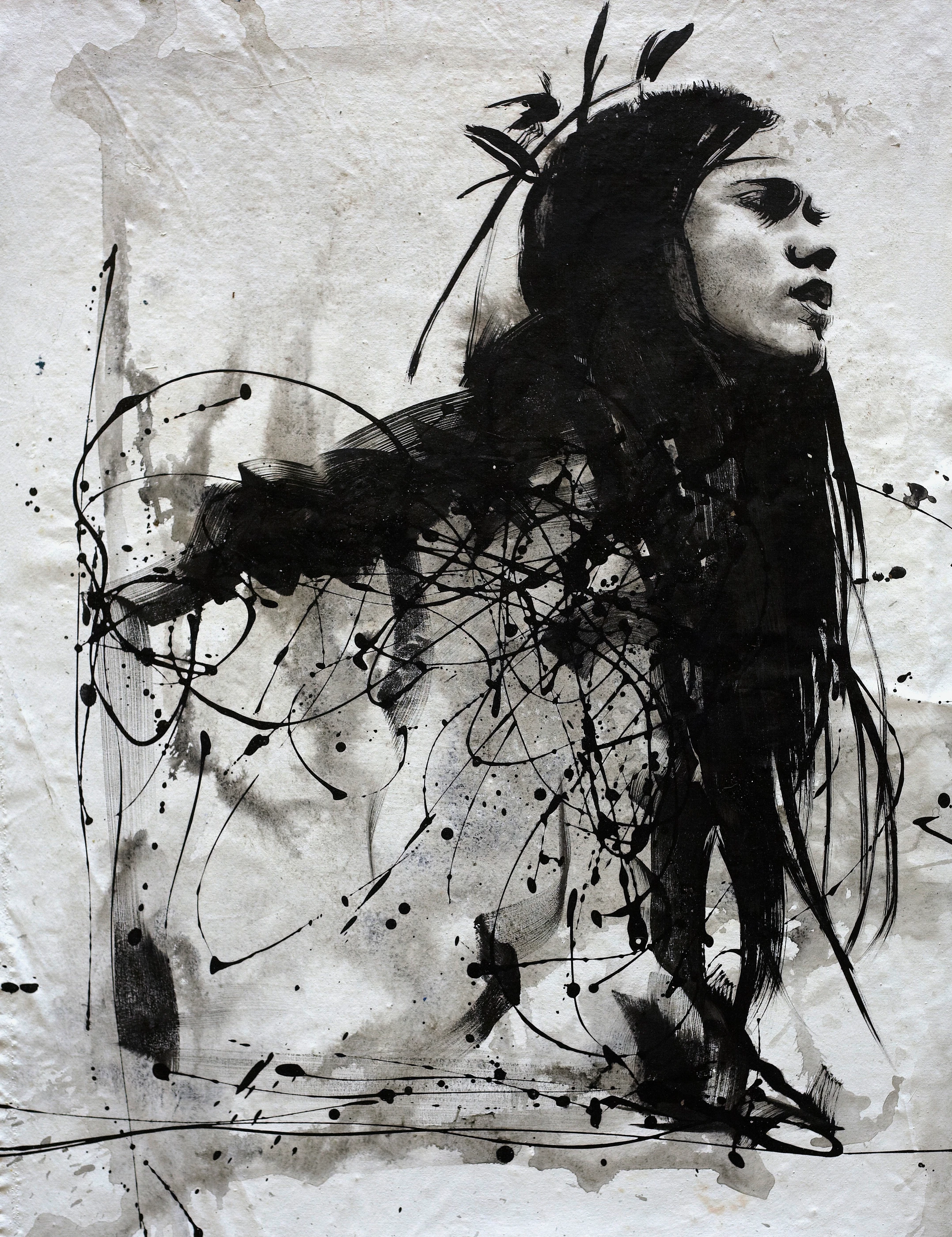
So he set down the elaboration of oil and turned to ink mixed with acrylic, letting black spatter, drip and bleed across raw canvas, colour peeled away layer by layer until only black and white remained. Of this peeling he spoke most plainly: colour is "the false garment of decorum"; once it is shed, the long-suppressed, most primal self breaks free at last. If until now he had peeled the wrappings that society and emotion put on a person, "Berlin Calling" peels civilisation itself — that garment woven of cultivation, rule and propriety, which we are dressed in from childhood and never take off.
It is also a threshold of method. He no longer presupposes the image but hands authority to chance: letting ink run where it will, setting down each stroke on instinct — of more than forty works he claimed only eighteen. What held him was never the finished piece but the irreversible self-calibration from the first canvas to the last. When the medium itself hangs between the controlled and the uncontrollable, truth finds a gap to slip through; control held too tight only paints one more wrapping.
It is worth remembering that this double impulse — layered translucency, and peeling down to nothing but light and dark — will meet again, years later, in his "pixel glazing": a method that approaches truth through layer upon translucent layer, its seed already buried in these few black-and-white inks from Berlin.