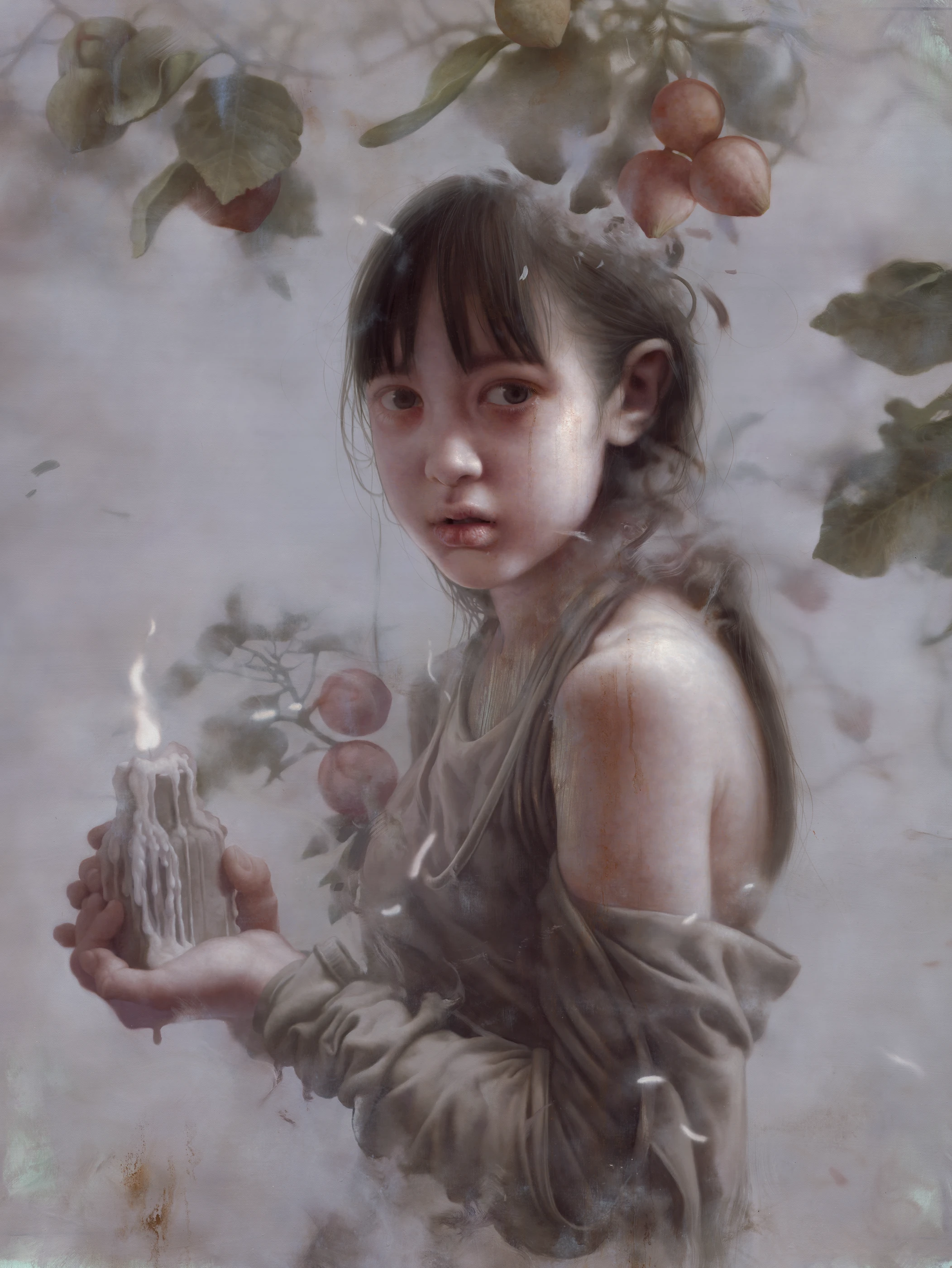
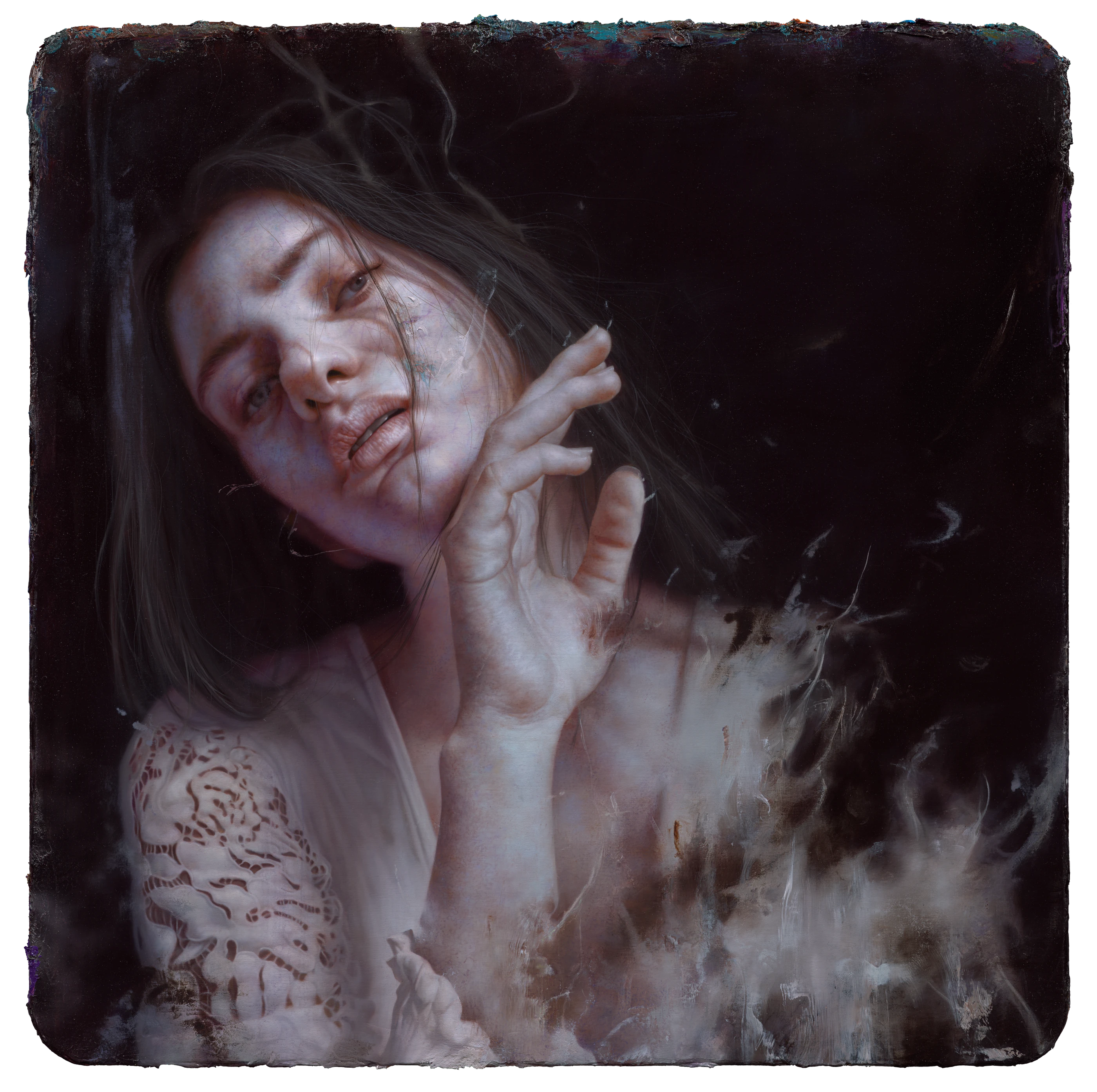
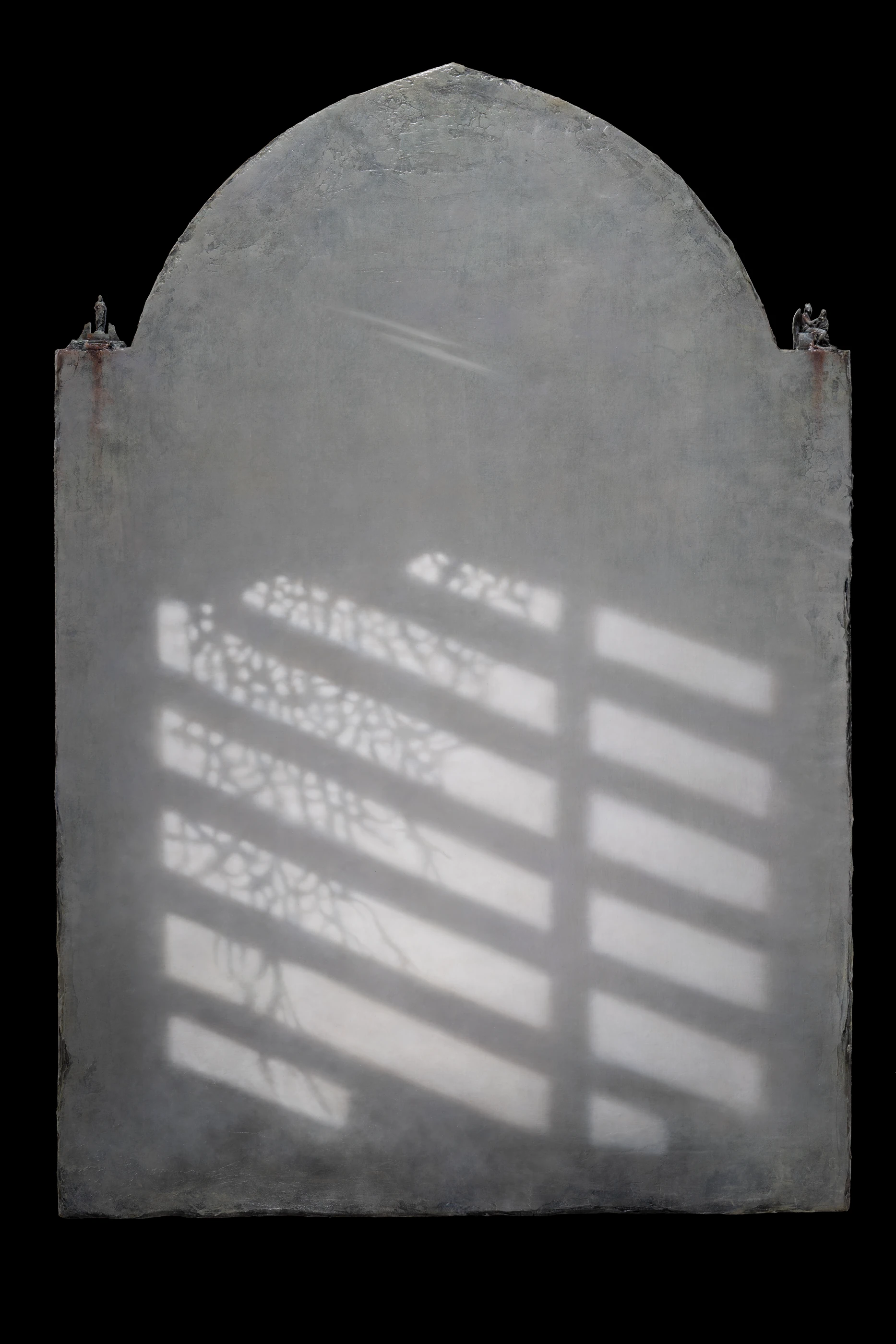
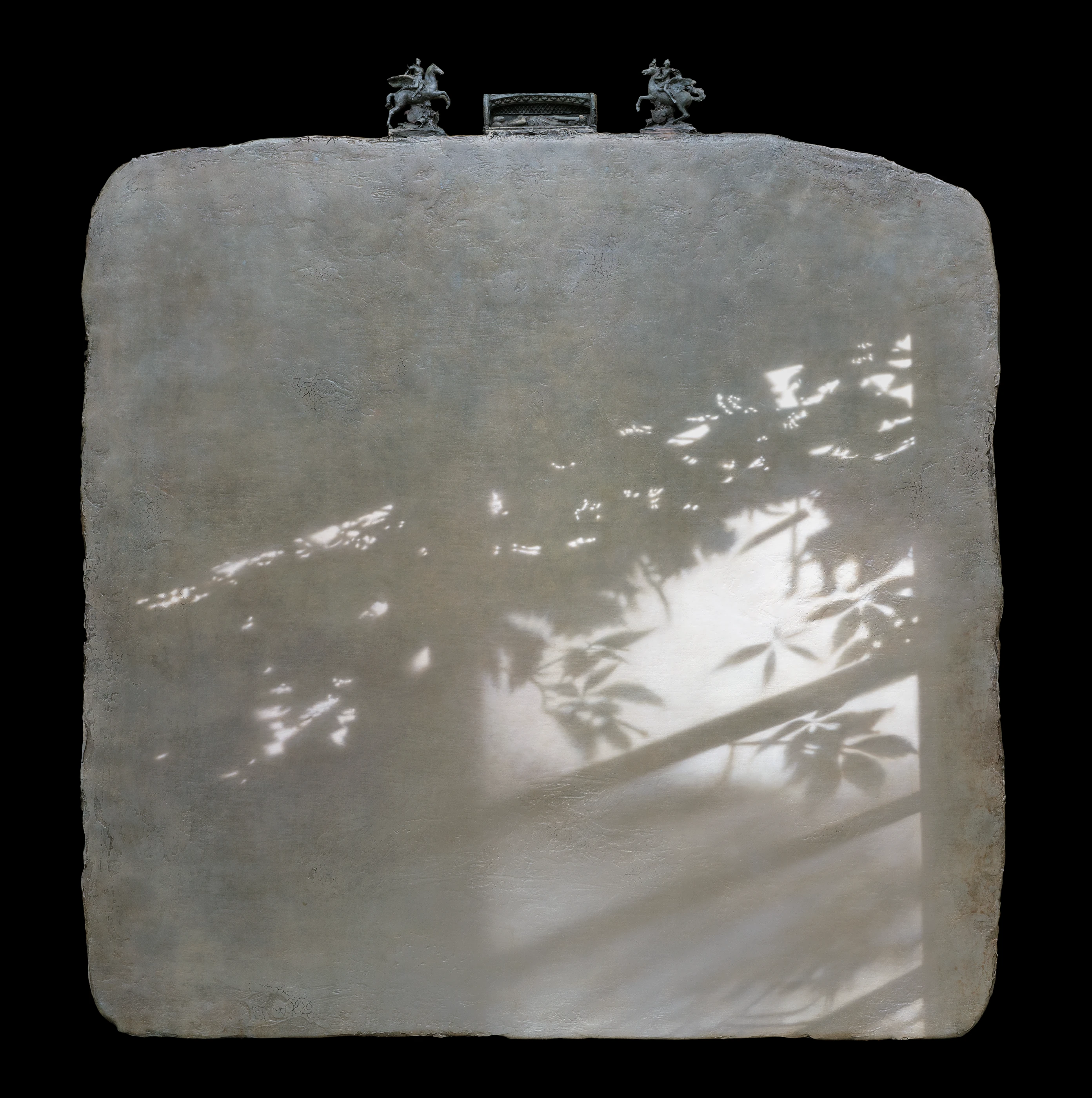
For someone to whom painting was as natural as breathing, what happens on the day he can no longer breathe — how does he paint then? "Lumière" was born of a loss in his life beyond all words. After an eternal parting, he fell into a long season of self-torment; and it was within that utter darkness that he made, for the first time, "light" itself — rather than any face — the subject of his work.
If until now he had peeled the wrappings that society, emotion and history put on a person, before death all of these failed at once. Death tears off the last garment: when someone you love ceases to exist, nation, propriety, social role suddenly seem beside the point. What remains is the barest truth — time, and what time takes away. And so grief is scoured away inch by inch, settling into thickness and weight, condensing into the monumental *Light* and *A Brief History of Time*: along the upper edge of the canvas he sets miniature realist sculptures, letting form break free of the painted plane and enter the body of sculpture, bearing together the mystery of life and death, and the weight of art history and human history.
This is duration's heaviest appearance. Light here is no longer what illuminates the picture — it is the last, and least shakeable, trust in existence itself that a person keeps after passing through the deepest dark. When every wrapping has been peeled away by death, what he touches at the very bottom is not the void, but the fact that time has truly, and irreproducibly, passed through a life.