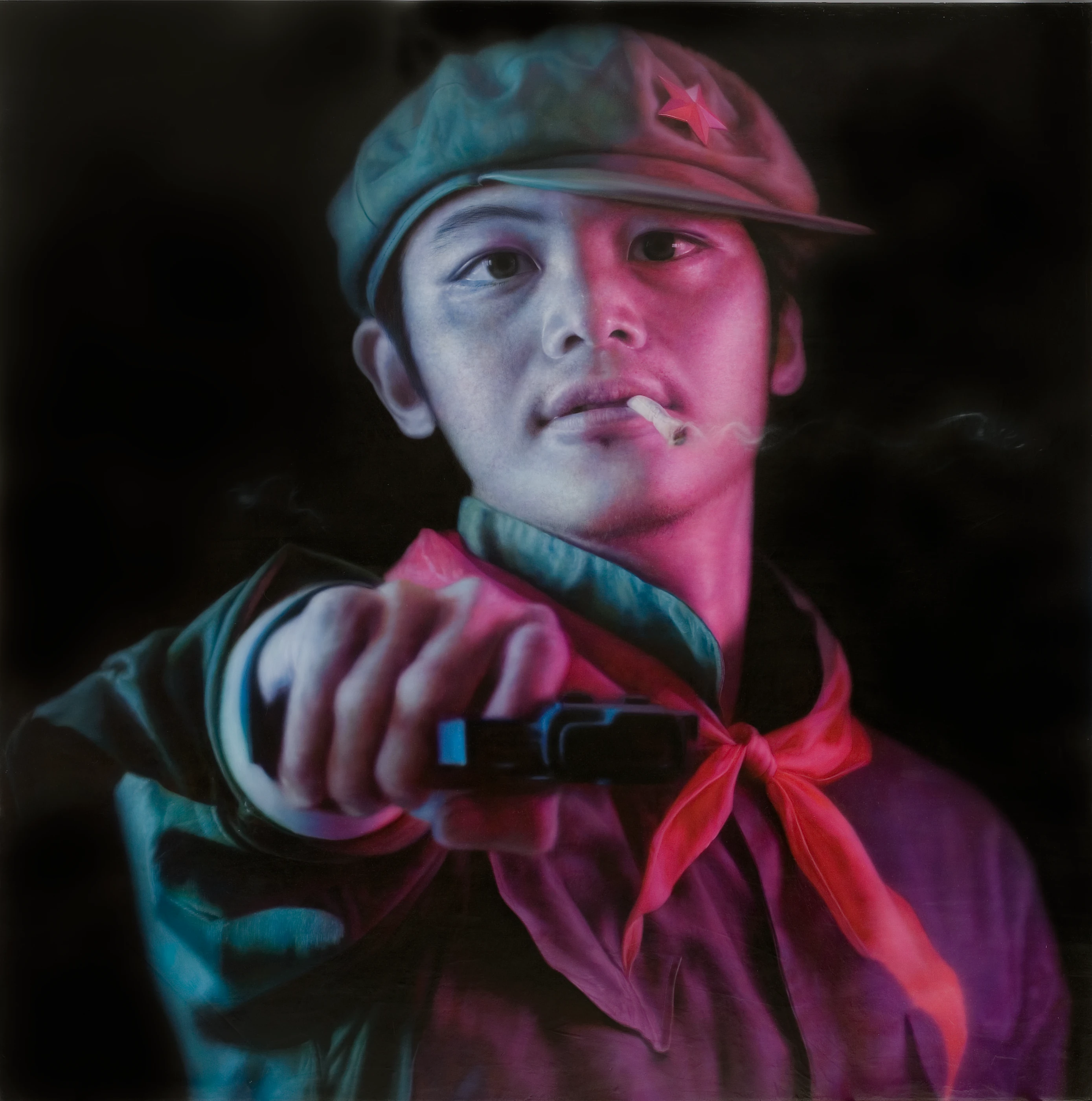
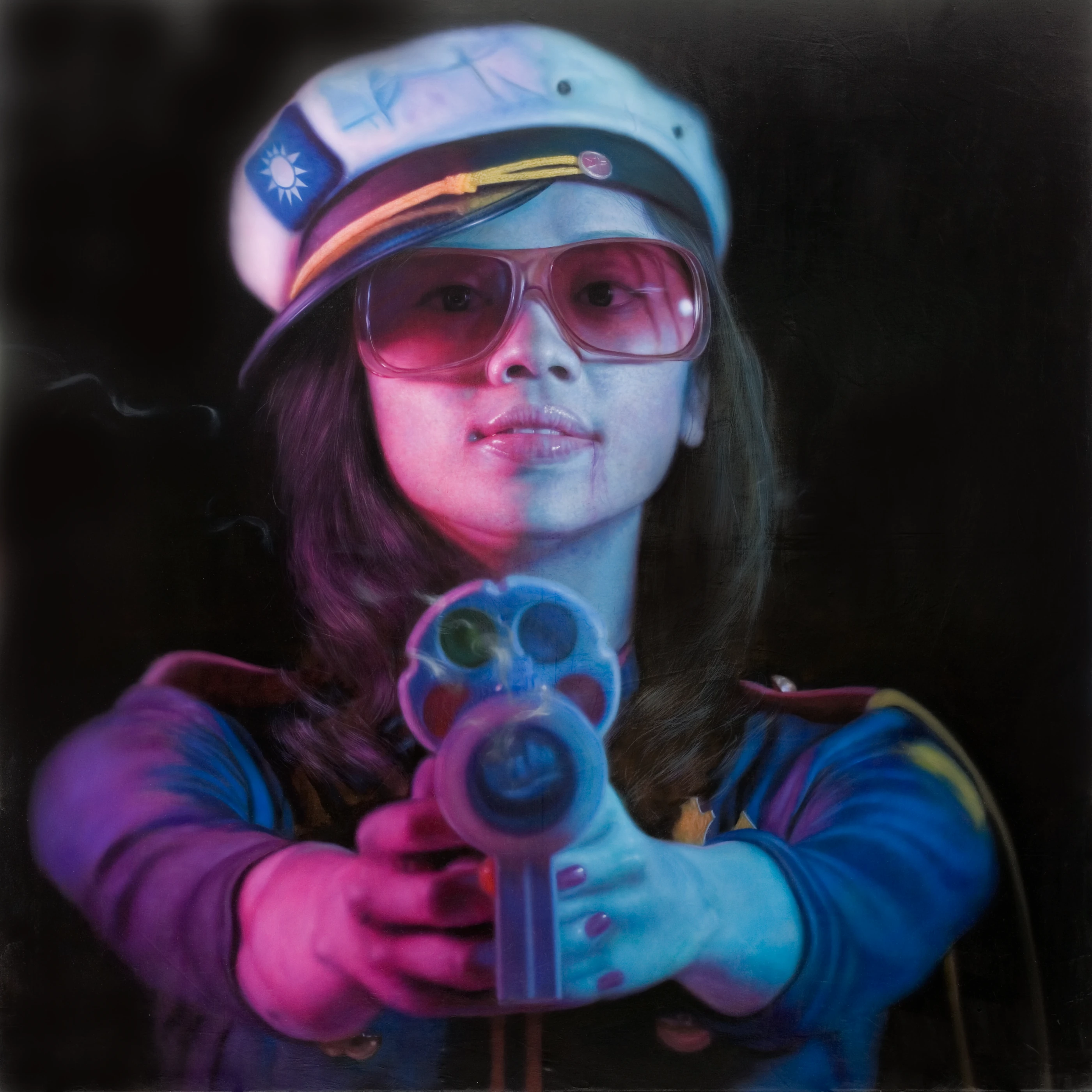
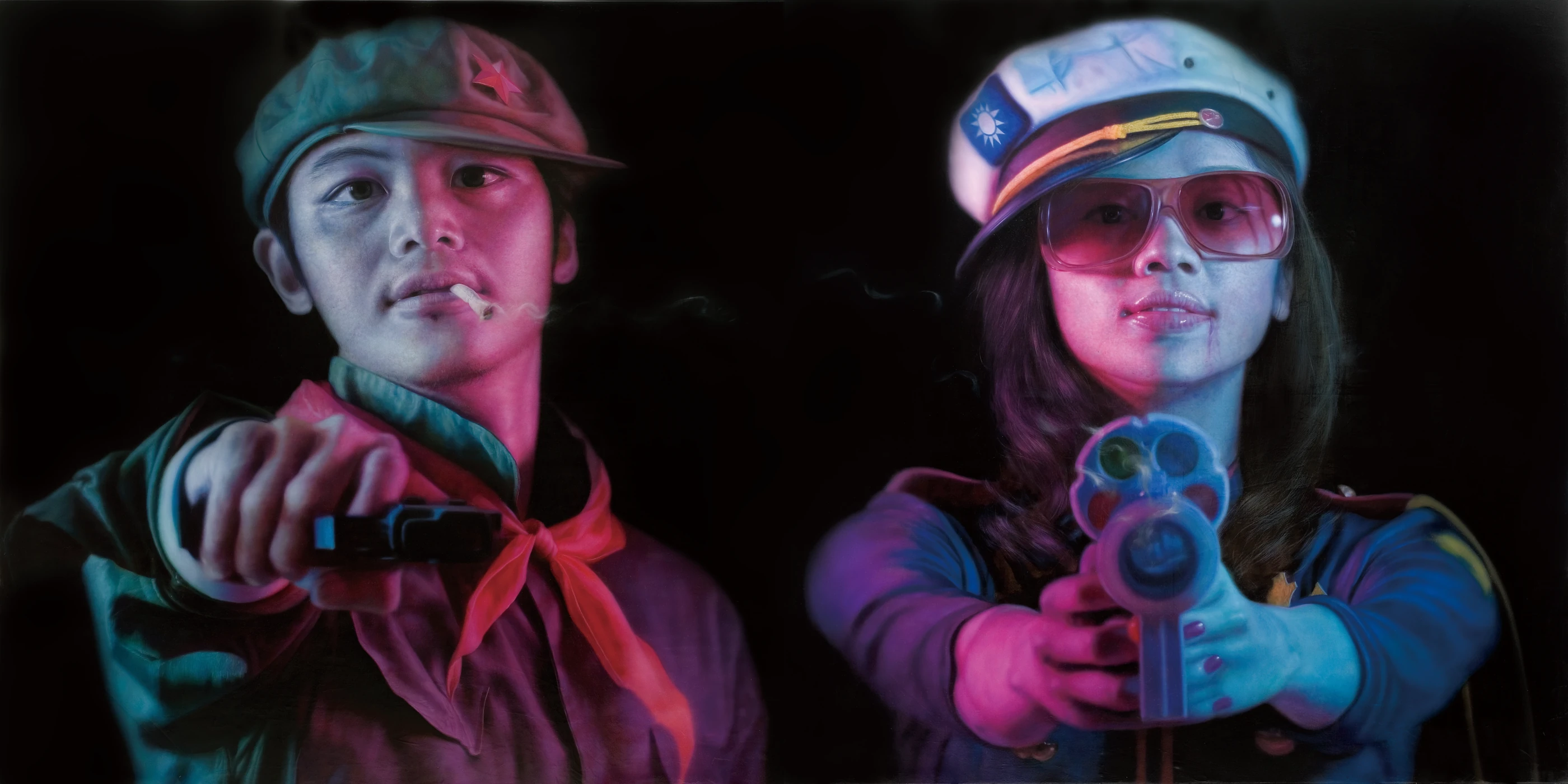
If "Cell Division" tucked politics into a single lens, "The Super Smash" brings it to the very front of the picture. A young man and a young woman, capped with the emblems of the Communist and the Nationalist parties, a real pistol in one hand and a bubble-gun in the other, face you side by side, half earnest, half flippant.
He demotes the cross-strait political standoff — grave enough to decide countless fates — into a video-game "Super Smash"; and the demotion is itself an exposure. We are taught to take these positions seriously, to pick a side; Lo paints it as a game played by toy soldiers, forcing you to see that beneath the wrapping of "this is your solemn political choice" lies a game no one can truly quit. Real pistol and bubble-gun in one frame: between lethal intent and child's play, only a bubble, ready to burst at any moment.
This too is a threshold: a generation caught between play and violence, between passive participation and no way out, no longer innocent yet not yet able truly to choose. That half-earnest, half-flippant expression is the only posture available to one who has seen through the wrapping and is trapped in it still.
His constant strategy is at its barest here, of a piece with the trap of "The Journal" — first convinced by the surface, then struck by what lies beneath: the sweetest, most fashionable shell wrapped around the most unsettling core. The figures smile, strike their mocking poses; but the longer you look, the less you can smile, for it dawns on you that this melee has no winner — and that even the act of "choosing a side" was a script someone else wrote for you long ago.